
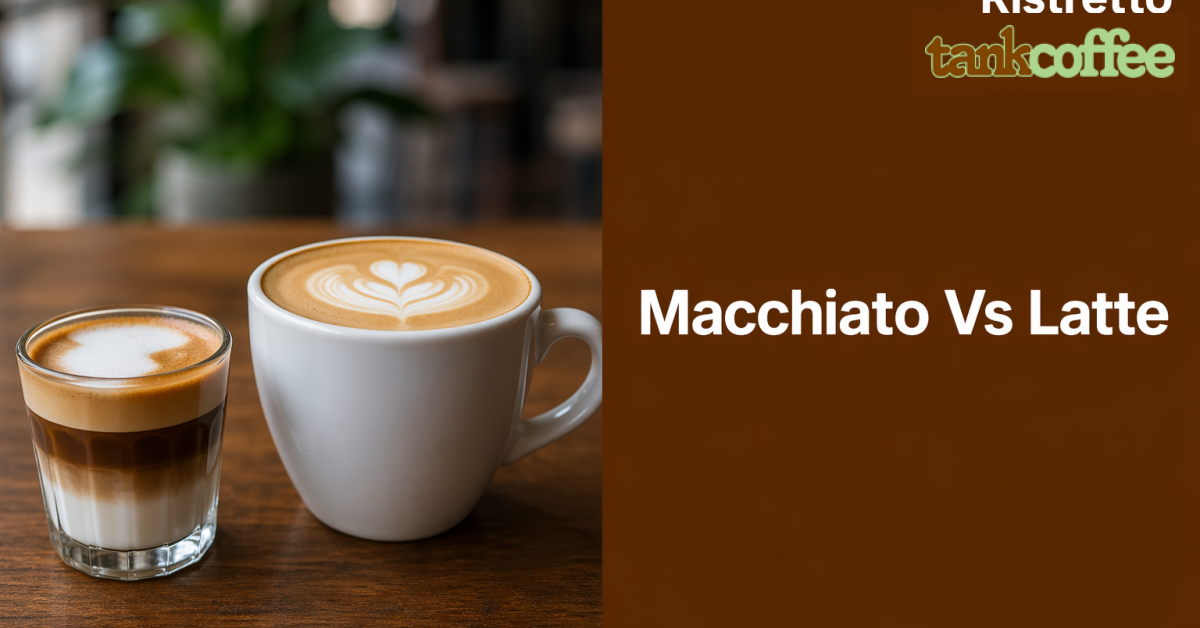
Macchiato Vs Latte
Macchiato and latte share one ingredient and little else in the finished cup. Both start with espresso, but the milk ratio rewrites the drink. A macchiato keeps the shot exposed, softened by the smallest addition of milk. A latte buries the same shot inside steamed milk until the coffee reads as a background note.
Once that split clicks, ordering, brewing at home, and buying the right beans all become straightforward.
Key Takeaways
Here is the short version before we get into the detail.
- A macchiato is espresso marked with milk. A latte is milk marked with espresso.
- Macchiato tastes stronger, but a double-shot latte often contains more caffeine.
- Milk technique, especially microfoam, separates a good latte from a forgettable one.
- Bright single origins suit macchiato. Medium-roast blends suit latte.
- Chain macchiatos are typically flavoured milk drinks, not the Italian original.
- A real latte needs a proper steam wand. A macchiato is easier to make at home.
The sections below expand on each of these points with practical ordering and brewing notes.
Macchiato Vs Latte At a Glance
This table captures the core differences between the two drinks in their traditional forms.
| Drink | Espresso To Milk | Typical Size | Character |
|---|---|---|---|
| Traditional Macchiato | 1 shot with a teaspoon of milk or foam | 60 to 90 ml | Concentrated, espresso-forward |
| Caffè Latte | 1 to 2 shots with 200 to 300 ml steamed milk | 220 to 350 ml | Smooth, milk-led |
| Latte Macchiato | Milk base marked with espresso poured through | 250 to 350 ml | Layered, mild, milky |
If a macchiato arrives in a 12oz cup, it is almost always a flavoured latte variant rather than the Italian original.
The Core Difference In One Line
The split between these drinks comes down to a single ratio decision. A macchiato is espresso marked with milk. A latte is milk marked with espresso.
Cup shape, mouthfeel, and perceived caffeine all follow from that ratio flip. Get the ratio right and the rest of the drink falls into place.
What A Traditional Macchiato Actually Is
The Italian word macchiato means stained or marked, and that describes the drink precisely. A single or double espresso receives a small dollop of textured milk, often no more than a teaspoon, enough to cut the crema’s sharpest edge without turning the cup milky.
How It Is Built
A barista pulls the shot, then adds either a touch of steamed milk or a small cap of foam directly onto the crema. The drink lands in a demitasse, usually 60 to 90 ml total volume. It is served and drunk within a few minutes and does not invite sipping.
What It Tastes Like
The roast profile comes through clearly. Chocolate, stone fruit, nut, or the brighter citrus notes of a washed East African bean stay legible.
- Ethiopian or Kenyan arabica: acidity registers quickly
- Darker Brazilian or Sumatran blends: cocoa and roast depth sit forward
- Milk rounds the finish rather than hiding anything
The result is a short, espresso-led drink where the bean is still the point.
Where Shops Muddle The Name
Large chains have rebuilt macchiato as a sweetened, vanilla or caramel-laden milk drink served tall. That version is closer to a flavoured latte.
Neither is wrong in a commercial sense, but order a macchiato expecting the espresso-led original and receive 350 ml of milk and syrup, and the disappointment is a naming problem rather than a quality one.
What A Latte Actually Is
A caffè latte is a longer drink where steamed milk does most of the heavy lifting. One or two shots of espresso sit beneath 200 to 300 ml of milk textured to a silky microfoam, finished with a thin foam cap around 1 cm deep.
The Role Of Steamed Milk
Milk is not a dilutant in a latte. Properly stretched, it draws out natural lactose sweetness and carries espresso through the cup with body and weight.
- Under-steamed milk leaves the drink thin and watery
- Over-aerated milk turns it dry, bubbly, and hollow in the middle
- Correctly textured milk reads as sweet and glossy
Texture is not decoration here. It is the drink.
What It Tastes Like
A well-made latte reads as sweet, creamy, and gentle, with espresso detectable but never aggressive. Medium roasts with chocolate and caramel notes tend to work better in latte format than bright, acidic lighter roasts, which can taste thin or sour once diluted.
This is why espresso blends designed for milk drinks often lean toward Brazilian, Indian, or Central American components rather than ultra-bright Ethiopian single origins.
Strength, Size, And Caffeine
This is where most assumptions fall apart, because perceived strength and actual caffeine are not the same thing.
Smaller Does Not Mean Weaker
A macchiato tastes stronger than a latte but does not necessarily contain more caffeine. Caffeine tracks espresso volume, not cup size.
| Drink | Typical Caffeine |
|---|---|
| Single-shot macchiato | 60 to 75 mg |
| Double-shot latte (12oz) | 120 to 150 mg |
So the smaller, punchier cup can easily contain less caffeine than the milder, larger one.
Perceived Intensity
The macchiato feels stronger because each sip delivers a higher espresso-to-milk ratio on the tongue. A latte distributes the same or greater caffeine across a much larger volume, so the palate registers smoothness instead of punch.
Perception and caffeine content diverge here, which is worth knowing when choosing a drink by how much it will actually do.
Which To Choose For What
A macchiato suits a quick mid-morning reset or a post-lunch finisher. A latte works better as a breakfast drink, a slow café sit, or anything consumed over twenty minutes.
For espresso clarity with a soft landing, choose the macchiato. For volume, warmth, and a gentler cup, choose the latte.
Milk Technique Separates Good From Forgettable
Ratio gets the categories right. Milk technique decides whether either drink is worth drinking.
Texturing For A Macchiato
The milk cap on a macchiato needs to be dense enough to float a spoonful cleanly on the espresso without collapsing into the cup. A small amount of stiff foam or a quick pour of silky microfoam both work, though the result differs.
- Stiff foam: gives a visible white dot on the crema
- Microfoam: integrates more quickly and softens the shot across the whole drink
Either is valid, but the drink reads differently depending on which the barista chooses.
Texturing For A Latte
A latte lives or dies by microfoam. Milk should be stretched in the first few seconds of steaming, then heated to roughly 60 to 65°C while rolling continuously.
The finish should be glossy, with no visible bubbles. Pour should start high to break through the crema, then drop close to the cup to float the foam into the classic pattern.
What Goes Wrong
Over-stretch the milk and you end up with a cappuccino in everything but name. Under-stretch it and the latte turns flat, oddly savoury. Push above 70°C and the scalded lactose kills the sweetness the drink depends on.
These are the faults that separate a latte worth paying for from one that tastes like warm dishwater.
How Bean Choice Changes Both Drinks
The espresso underneath shapes the result more than most drinkers notice, and the right bean depends on which drink you are making.
Single Origin Versus Blend
A bright single-origin Ethiopian Yirgacheffe shines as a macchiato, where its floral and citrus notes remain intact. The same bean in a latte can taste thin, sour, or washed out once buried in milk.
Blends built for espresso, often Brazilian-led with a Central or South American backbone, tend to hold up better in milk drinks because the chocolate and nut notes cut through.
Roast Level
Roast choice tracks the drink’s ratio more than personal preference.
- Light roasts: accentuate acidity, suits the macchiato format
- Medium to medium-dark roasts: caramelised sugars and cocoa, reads as sweetness in a latte
- Very dark roasts: loses nuance in both, adds bitterness milk only partially covers
Roast selection is as much a format decision as a flavour one.
Grind And Extraction
Under-extracted espresso tastes sour and sharp. In a macchiato, that fault is exposed immediately. In a latte, milk can mask it just enough to let a bad shot through, which is why many chain lattes taste acceptable but forgettable.
Home setups benefit from dialling in the grind for each new bag, particularly when switching between origins or between single origin and blend.
Ordering Without Disappointment
Names vary. Recipes vary more. A little specificity at the counter removes most of the mismatch.
For A Traditional Macchiato
Ask for an espresso macchiato with just a touch of milk. If the shop offers syrups by default, specify unsweetened.
If the menu only lists macchiato and the cup size suggests a tall drink, ask whether they do the Italian-style short version.
For A Better Latte
A few small questions tighten up the order.
- Ask how many shots the standard cup uses
- Request an extra shot for more coffee presence, especially in larger cups
- Ask for drier foam for firmer texture, or wetter foam for a silkier pour
These requests cost nothing and usually land a noticeably better drink.
Home Brewing Notes
At home, a macchiato needs only an espresso machine capable of a proper shot and a small jug of steamed or hand-frothed milk. A latte demands a steam wand that can produce microfoam, which rules out most basic pod machines.
Aeropress or moka pot espresso substitutes work for a macchiato-style drink but struggle with latte texture because they lack the crema and body of a true pressurised extraction.
Choosing Beans That Serve Both Styles
For households switching between a morning latte and an afternoon macchiato, a versatile medium-roast espresso blend covers both formats without forcing a compromise. Brazilian-led blends with a touch of washed African coffee give enough brightness for the macchiato and enough body for the latte.
Keep a single origin alongside for weekend macchiatos, where the character of the bean becomes the point of the drink.
Tank Coffee roasts 100% arabica to order from our Greater Manchester roastery, with origin-led single origins like Ethiopia Yirgacheffe and Kenya Kiri Kirinyaga for macchiato drinkers, and espresso blends built for milk-based drinks for latte regulars. Bag sizes run larger than many supermarket equivalents, which matters for households going through two or more drinks a day.
Frequently Asked Questions
Is a macchiato always stronger than a latte?
On the palate, yes, because the espresso sits almost undiluted. On caffeine content, a double-shot latte can contain more than a single-shot macchiato. Strength on the tongue and total caffeine are not the same measurement.
Can I make a proper latte without a steam wand?
Not really. Handheld frothers and French press aeration produce foam, but not the fine microfoam that gives a latte its body and gloss. You can make a passable milk coffee, but the defining texture depends on pressurised steam.
Which beans work best if I drink both drinks regularly?
A medium-roast espresso blend with a Brazilian or Central American base and a small percentage of washed African coffee covers both formats. It holds up to milk in a latte and still shows character in a macchiato. Keep a brighter single origin alongside for weekend macchiatos where bean character matters most.