

What Are The Top 10 Best Coffees?
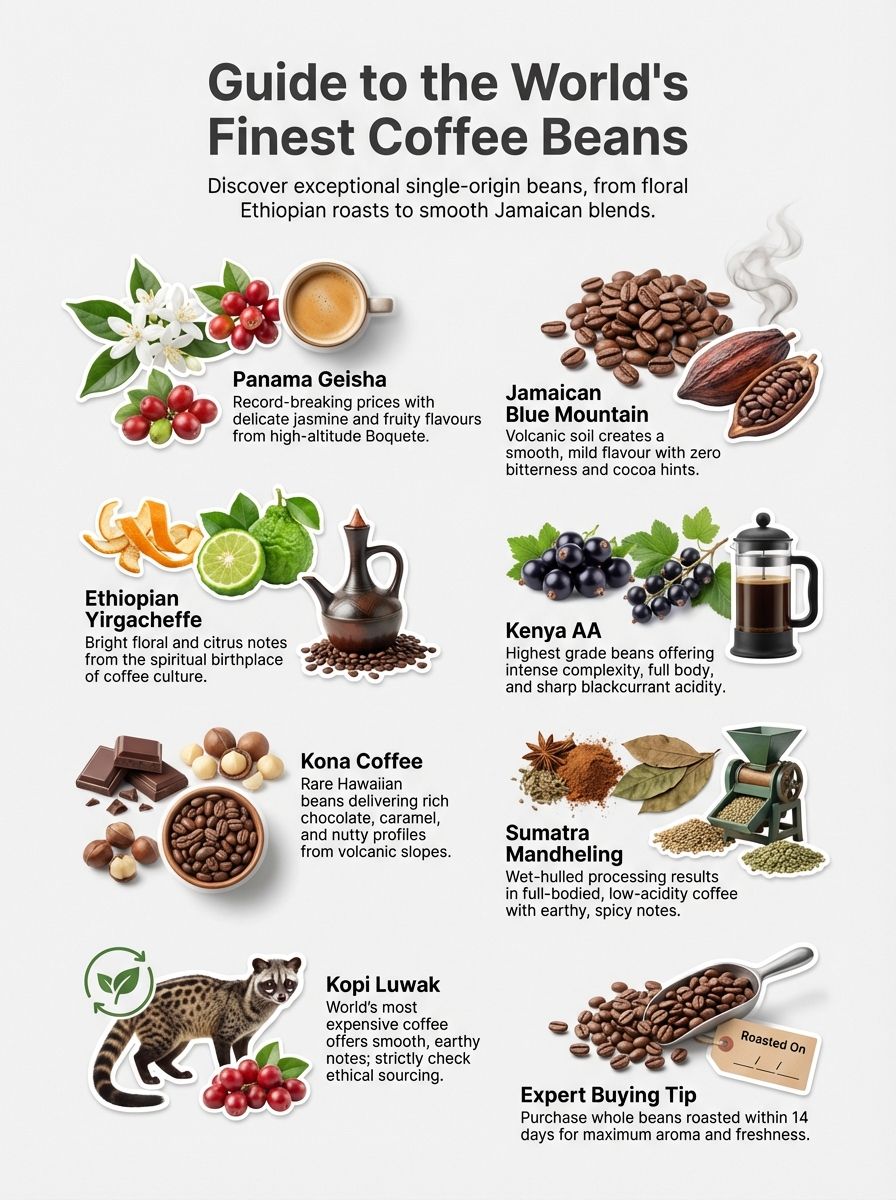
The top 10 best coffees are Panama Geisha, Jamaican Blue Mountain, Kona Coffee, Ethiopian Yirgacheffe, Kenya AA, Tanzanian Peaberry, Kopi Luwak, Sumatra Mandheling, Yemen Mocha and Guatemala Huehuetenango.
We rank these coffees because origin, altitude, processing and SCA scores determine cup clarity, aroma and market value.
Choose single origin lots like Panama Geisha or Ethiopian Yirgacheffe for delicate floral and citrus notes, and choose Sumatra Mandheling or Kona Coffee for deep body and chocolate richness, because terroir and processing produce those signature profiles.
What Makes Coffee Beans Exceptional?
Quality coffee is not an accident. It results from specific farming conditions and rigorous grading standards. The Specialty Coffee Association (SCA) grades beans on a 100-point scale. Anything scoring above 80 points is classified as “specialty grade”. This score directly influences the price and flavour you experience in your cup.
Single Origin vs. Blends
A single origin coffee comes from one specific location. This could be a single country, a region, or even a specific micro-lot on a farm. This transparency allows you to taste unique flavour profiles tied to that land. An Ethiopian Yirgacheffe offers distinct floral and citrus tastes. A Sumatra Mandheling provides heavy, earthy notes. Buying single origin beans ensures full traceability back to the producer.
Coffee blends mix beans from various origins. Roasters do this to create a consistent product year round. This is common for espresso roasts used in milk based drinks like flat whites. The milk can mask the delicate nuances of a single origin. A blend provides a consistent taste that does not change with the seasons.
Most high-street coffee shops use blends to guarantee the same flavour in every latte. Choose single origins for black coffee brewing methods like pour over to appreciate the bean’s true character.
Factors That Affect Quality: Altitude, Soil, and Processing
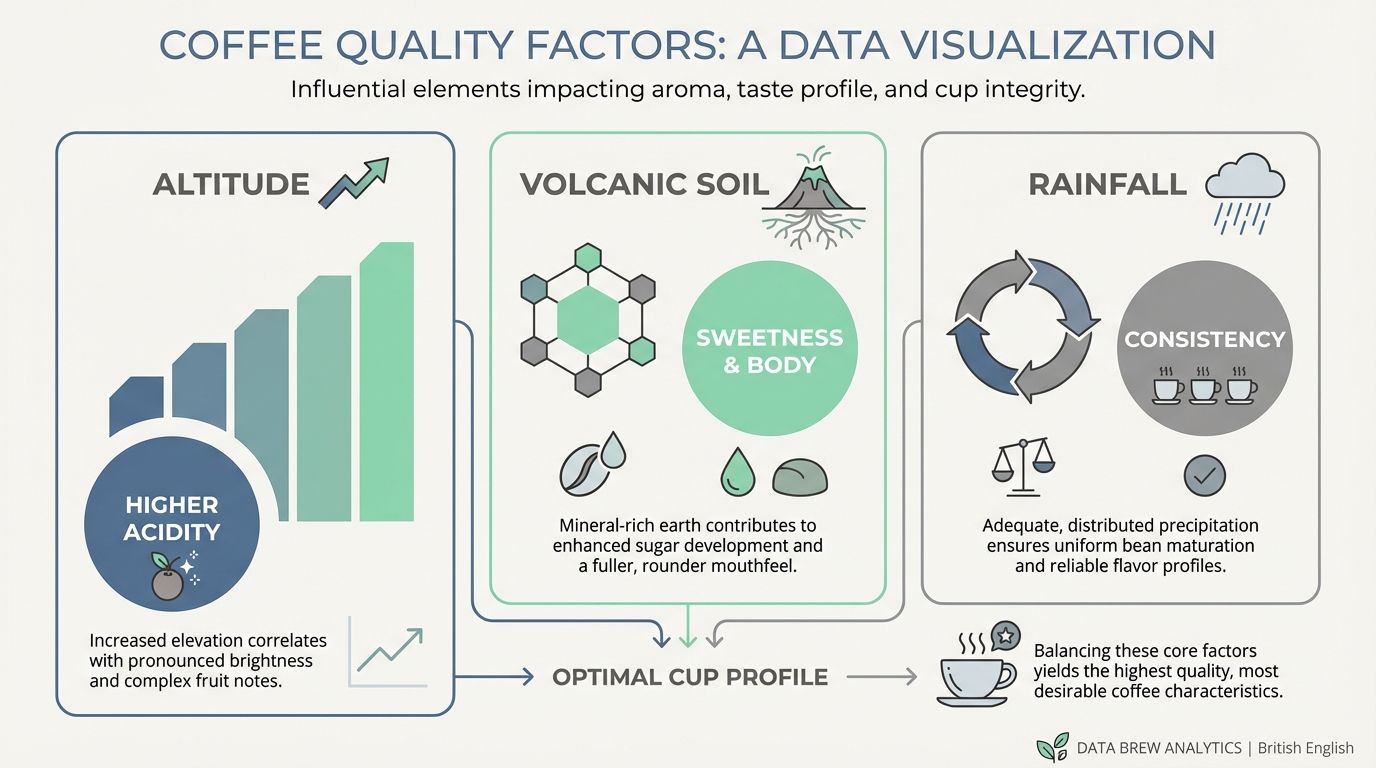
Altitude is a primary driver of flavour intensity. Beans grown above 1,500 metres develop more complexity. The cool air at these heights slows down the maturation of the coffee cherry. This allows sugars and acids to develop more fully. High altitude beans are denser and harder. They require higher temperatures during roasting to unlock their potential.
| Factor | Why It Matters | Impact on Flavour |
|---|---|---|
| Altitude | Cooler air slows growth. | Higher acidity, more complex fruit sugars. |
| Volcanic Soil | Rich in phosphorus and nitrogen. | Adds sweetness and a heavy, creamy body. |
| Rainfall | Defines flowering and harvest cycles. | Consistency in bean size and reduced defects. |
Processing methods shape the final flavour notes before roasting begins. The “washed” process removes the fruit flesh immediately. This results in a clean cup with bright acidity.
The “natural” process dries the bean inside the fruit cherry. This imparts sweet, wine-like fruit flavours. You will often see natural processed coffees in independent coffee roasters across the United Kingdom and Ireland.
Panama Geisha Coffee
Panama Geisha coffee is widely considered the pinnacle of modern coffee luxury. It grows best at the Hacienda La Esmeralda estate in the Chiriqui Province. The plants thrive at high elevations between 1,450 and 1,700 metres. The cool mist in Boquete protects the trees and concentrates the flavour.
This variety has Ethiopian roots. It was identified in the Gori Gesha forest in the 1930s before arriving in Panama in the 1950s. Its rise to fame began in 2004 when it took first place at the Best of Panama Competition. It stunned judges with a tea-like body and intense jasmine aroma. Since then it has consistently broken financial records.
Top lots of washed Geisha have sold for over $30,204 per kilogram at auction. Roasteries such as Hayman Coffee and Klatch Coffee Roasters secure these limited lots. You should brew this bean gently using a filter method. Expect delicate floral notes and stone fruit sweetness. Scores frequently hit 98.00 on the 100-point scale. This confirms its status as an outlier in the world of speciality coffees.
Jamaican Blue Mountain Coffee
Authentic Jamaican Blue Mountain Coffee grows in a legally defined area of the Blue Mountains between 3,000 and 5,500 feet. The region’s unique microclimate features constant mist and rich volcanic soil. These conditions inhibit bitterness. The result is a cup with a remarkably smooth finish and zero harshness.
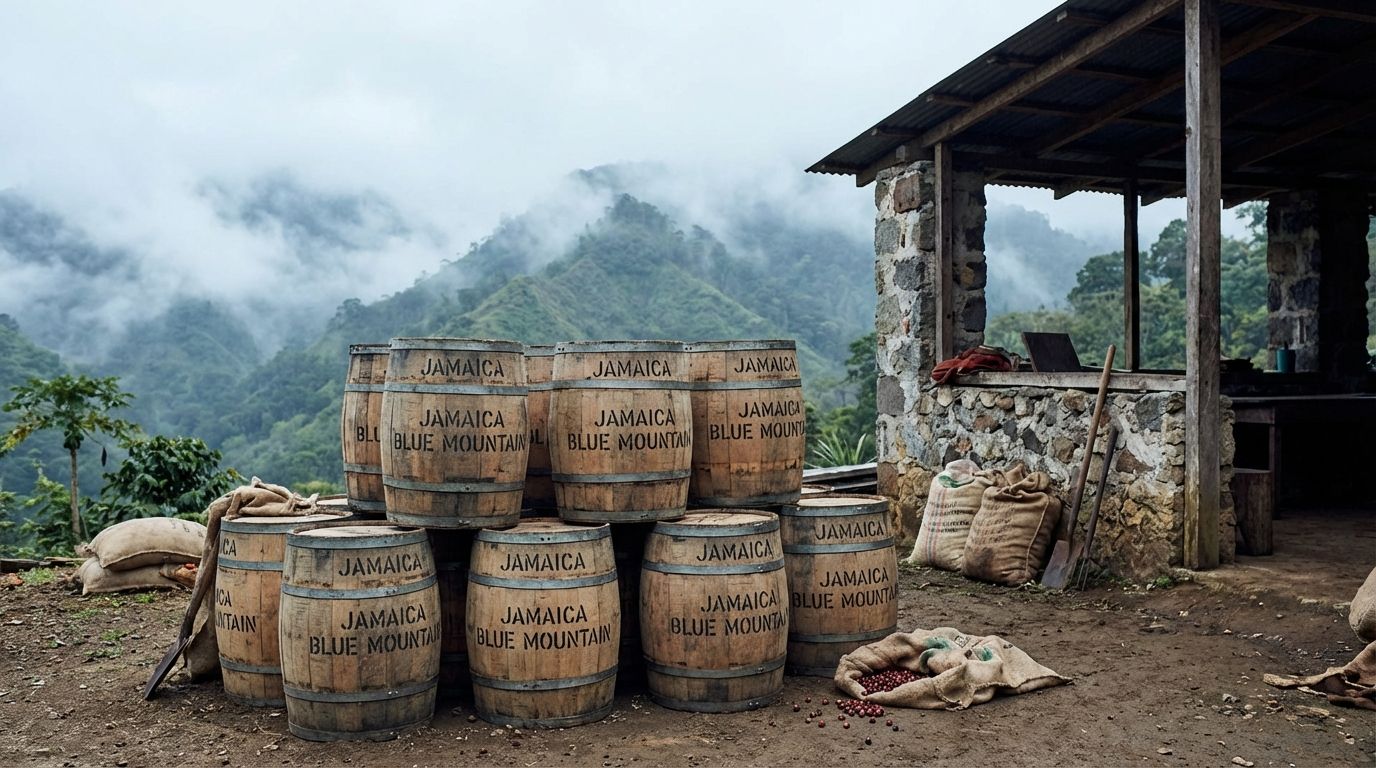
“True Blue Mountain coffee is the only coffee in the world still shipped in iconic wooden barrels rather than grain bags to preserve moisture content.”
These Arabica beans rank among the best coffee beans for those who prefer balance over acidity. The Coffee Industry Board of Jamaica strictly regulates the “Blue Mountain” label to prevent fraud. The crop recently won the 2025 Grand Gold Quality Award. Japan purchases nearly 80 per cent of the 45 million pounds harvested annually.
UK buyers can find this rare bean through specialists like Volcanica and Coffee Traders. Prices typically sit between £50 and £100 per pound. While expensive, it offers a historic and luxurious experience for home brewing.
Kona Coffee
Real Kona coffee comes exclusively from the slopes of Hualalai and Mauna Loa in Hawaii. The Kona Coffee Belt is a small strip of land that produces beans with distinct notes of milk chocolate, caramel, and nuts. The United States enforces strict labelling laws here.
The grading system is precise. Beans are ranked by size and moisture density. The top grades are Extra Fancy and Fancy. Kona Peaberry is a rare mutation where the cherry contains one round bean instead of two flat ones. These peaberries are prized for their concentrated flavour intensity.
Be careful when buying blends. A “Kona Blend” may legally contain as little as 10% Kona beans. Always look for “100% Kona Coffee” on the label. Farms like Greenwell Farms and Ohana Martin Farm produce award-winning crops. Expect to pay between $40 and $70 per pound for the real thing.
Ethiopian Yirgacheffe Coffee
Ethiopia is the birthplace of coffee. The Yirgacheffe region in the Sidamo province produces some of the most aromatic beans on the planet. Small family gardens grow these beans at altitudes of 1,700 to 2,200 metres. This high elevation creates bright floral and citrus notes.
The processing method changes the flavour dramatically. Washed Yirgacheffe tastes like lemon tea with hints of jasmine. Natural processed Yirgacheffe tastes like blueberry jam and strawberries. Ethiopia Honey Yirgacheffe recently scored 93 points for its outstanding profile.
Many UK roasteries now trade directly with cooperatives in this region. This ensures farmers receive fair payment. Use a pour-over method like a V60 or Chemex to highlight the delicate tea-like body of these beans.
Kenya AA Coffee
Kenya AA coffee beans are famous for their power and complexity. The “AA” label refers to the screen size. These beans are large enough to pass through a screen with holes measuring 7.2 millimetres. Larger beans often contain more oils and sugars.
The farms sit near Mount Kenya at 1,500 to 2,100 metres. The volcanic soil gives the coffee a savoury, wine-like character. Gatagua Murang’a lots won top awards in 2025 for their bright acidity and blackcurrant notes. This specific acidity is often called “phosphoric” and feels sparkling on the tongue.
Brew this coffee at 93–96°C using a medium-fine grind. This temperature extracts the fruit sugars without bitterness. Kenyan coffee is a favourite for blind tasting competitions because its profile is so distinct from lower grades like AB. It commands a premium price but delivers a massive flavour impact.
Tanzanian Peaberry Coffee
Tanzanian Peaberry offers a unique twisting on the classic East African profile. Peaberries occur in only 5 to 10 per cent of the harvest. The single round bean roasts more evenly than a flat bean. It rolls easily in the roasting drum. This allows for better heat transfer and a sweeter cup.
These beans grow in the volcanic soils of Mount Kilimanjaro and Mount Meru. You will taste bright acidity paired with a medium body. Flavour notes often include dried fruit, citrus, and chocolate. The Tanzania Fine Coffee Competition recognized these specific lots in 2023.
A light-medium roast preserves the delicate wine-like traits. You can find 340g bags for around £21.50 from suppliers like Colipse. It is an excellent alternative to Kenyan coffee if you want similar acidity with a lighter body.
Kopi Luwak Coffee
Kopi Luwak originates from Indonesia and is perhaps the most controversial coffee on the market. It is produced when the Asian palm civet eats the coffee cherries. The digestive enzymes of the animal break down proteins in the bean. This reduces bitterness and lowers acidity.
Wild-sourced beans are incredibly rare and cost $200 to $500 for 250 grams. Farmed varieties are cheaper ($50–$150) but come with a heavy moral cost. Many civets are kept in small cages and force-fed cherries.
Organisations like PETA and World Animal Protection have exposed cruel conditions in this industry. Always check for “wild-sourced” certification if you choose to buy it. The coffee itself offers a smooth, heavy body with earthy, caramel notes. Despite being the most expensive coffee, many experts argue that standard specialty beans offer superior flavour complexity.
Sumatra Mandheling Coffee
Sumatra Mandheling defines the heavy, earthy profile of Indonesian coffee. It grows in the Aceh region between 4,500 and 6,000 feet. The defining feature here is the “Giling Basah” or wet-hulling process. Farmers remove the parchment layer while the beans still have 50 per cent moisture.
This exposure creates a unique deep blue-green colour in the raw bean. It also mutes acidity and boosts body. The result is a thick, syrup-like texture with notes of dark chocolate, spice, and tobacco. It is intense and savoury.
This bean handles dark roasts exceptionally well. It is a perfect choice for a French press or cafetière. A 16oz bag typically costs £13 to £16. If you dislike the sour acidity of African coffees, Sumatra Mandheling is likely your perfect match.
Yemen Mocha Coffee
Yemen Mocha is one of the oldest and most historic coffees available. It is grown on ancient stone terraces in the Yemen highlands. The port of Al-Mokha was the primary marketplace for coffee from the 15th to the 17th century. The word “Mocha” originally referred to these beans, which have a natural chocolate flavour.
Production is limited to around 15,000 metric tons per year due to difficult terrain and conflict. Mokha 1450 recently won a Gold Award at the Transform Awards MEA in 2025. The beans are dry-processed, which means they dry in the sun with the fruit attached. This creates a wild, winey acidity mixed with dried spices like cardamom.
Due to the ongoing civil war, export routes are difficult. This drives prices up significantly. A single cup can cost £13 in a specialty shop. It remains a bucket-list coffee for serious enthusiasts.
Guatemala Huehuetenango Coffee
Huehuetenango is the highest and driest non-volcanic region in Guatemala. Coffee grows here between 5,000 and 6,500 feet. The area receives hot, dry winds from the Tehuantepec plain in Mexico. This protects the crops from frost and allows cultivation at extreme altitudes.
These Guatemala Huehuetenango beans are classified as “Strictly Hard Bean” (SHB). This is the highest quality designation in the country. The Aguirre family at Finca El Injerto has won the Cup of Excellence multiple times. Recent lots have scored over 90 points for their maple syrup sweetness and orange acidity.
You can buy these beans for around £22.99 per 340 grams. They are incredibly versatile. They work well as a bright pour-over or a sweet, balanced espresso. Look for sustainable growing standards like Rainforest Alliance certification when buying.
How to Choose the Best Coffee Beans
Selecting the right beans is the first step to a better morning. Use this checklist to filter through the options and find quality.
- Buy Whole Beans: Oxygen kills flavour. Ground coffee loses its aromatic oils within minutes. Grinding just before you brew locks in the taste.
- Check the Roast Date: Look for a “Roasted On” date, not a “Best Before” date. The peak flavour window is between 7 and 30 days after roasting.
- Select by Region: If you want fruit and flowers, choose Colombia or Ethiopia. If you want chocolate and body, pick Sumatra or Brazil.
- Look for the Grade: Words like “AA” (Kenya), “Supremo” (Colombia), or “SHB” (Guatemala) indicate higher physical quality standards.
- Verify the Altitude: Beans grown between 2,000 and 6,000 feet are denser and sweeter. Good packaging will list the elevation in metres.
- Choose Single Origin for Filter: These beans offer a distinct taste of a specific place. They are best for V60, Chemex, or Aeropress.
- Choose Blends for Milk: If you drink cappuccinos, a blend will punch through the milk better than a delicate single origin.
- Trust the Roaster: Buy from specialty roasters or independent shops. Supermarket bins are often stale and oily.
- Read the Notes: Tasting notes are not added flavours. They describe the natural character. “Blueberry” means the bean has natural acidity and sweetness resembling that fruit.
- Try a Subscription: A coffee subscription from a UK roaster ensures you get fresh beans delivered. It forces you to try new origins you might otherwise miss.
- Check Processing: “Natural” means fruity and funky. “Washed” means clean and crisp. Knowing this helps you avoid flavours you dislike.
- Sustainability: Look for certifications or direct trade statements. This ensures your money supports the farmers who grow the crop.
- Buy Local: Local roasters offer the freshest stock. Shipping across the country takes time. A nearby roaster gives you beans days off the roast.
These steps put you in control. You move from guessing at the shelf to making a data-driven choice for your morning brew.
Conclusion
You now have the knowledge to navigate the top tier of the coffee market. Whether you choose the floral elegance of Panama Geisha or the rich intensity of Sumatra Mandheling, quality is measurable. Focus on altitude, processing methods, and freshness to guarantee a better cup.
Great coffee is an affordable luxury that upgrades your daily life. Start with a local UK roaster and try a new single origin this week. Pay attention to the roast date and grind fresh. Small adjustments to your buying habits will yield massive improvements in flavour.
If you want to refine your skills further, my website offers detailed guides on brewing techniques. Explore the options and find the origin that speaks to your palate. Every cup is an opportunity to taste the best the world has to offer.