
Whole Bean Coffee Vs Ground Coffee
Choosing between whole bean and ground coffee is the first step to mastering your perfect cup at home. It’s a decision that directly impacts the freshness, aroma, and flavour waiting for you each morning.
The core difference lies in one simple action: grinding. Whole beans protect their delicate flavour compounds until the moment you decide to release them.
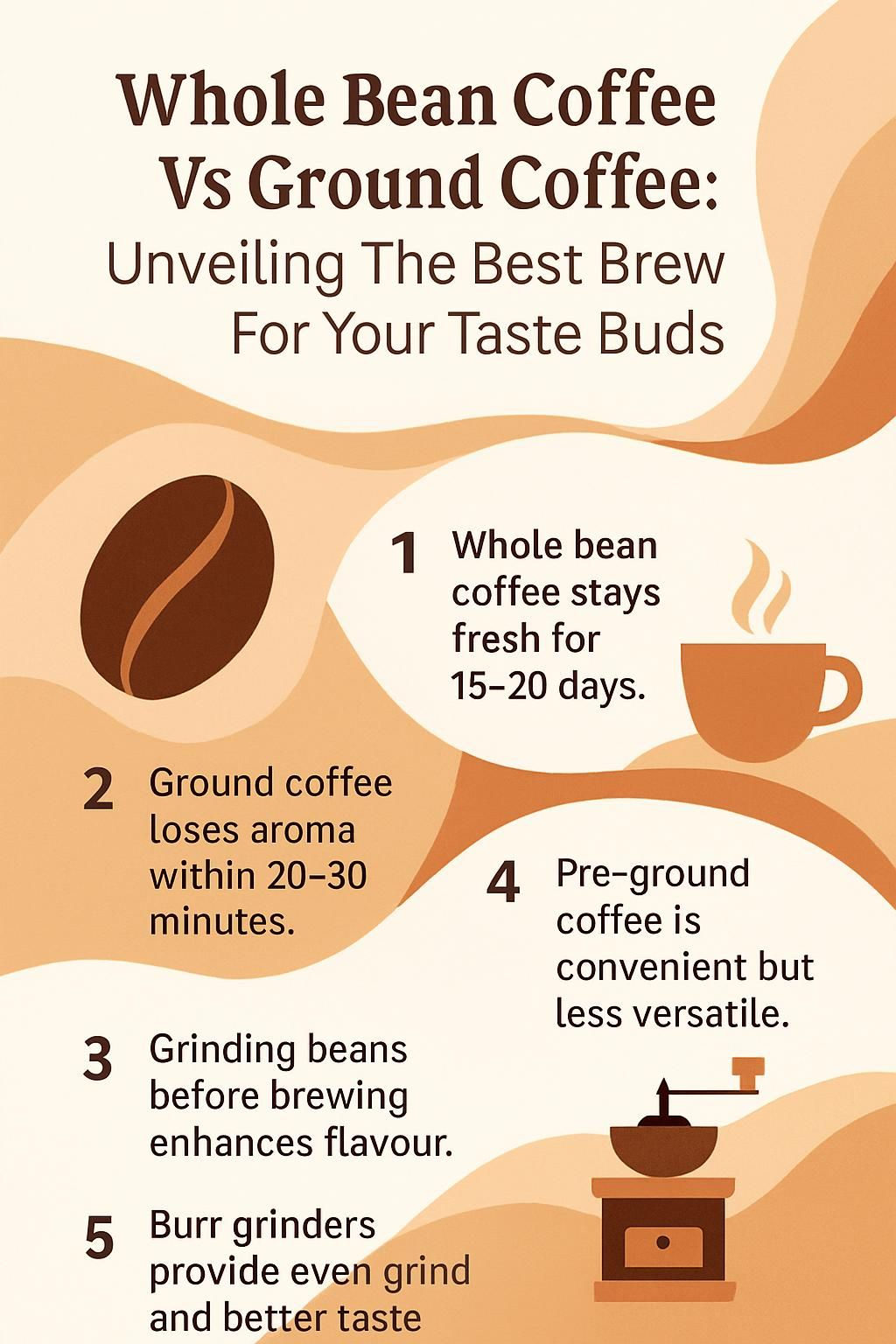
Pre-ground coffee offers incredible convenience, but this comes at a cost. Once ground, coffee’s surface area increases dramatically, causing it to lose flavour much faster through a process called oxidation. In fact, many aromatic compounds can dissipate within minutes of grinding.
This guide, drawing from my decade of experience in the UK’s online coffee market, will walk you through the practical differences. We’ll explore how to turn this choice into your biggest advantage for brewing a truly exceptional cup of coffee at home.
Key Takeaways
- Whole bean coffee locks in flavour and aroma, staying fresh for 3 to 4 weeks after roasting if stored correctly, while ground coffee loses its best qualities much faster due to oxidation.
- Grinding your own beans just before brewing is the single biggest upgrade you can make to your coffee experience, delivering a richer, more complex flavour profile.
- Pre-ground coffee is the champion of convenience, perfect for busy lifestyles and quick brewing with standard drip machines, though it offers less control over the final taste.
- Using whole beans allows you to customise the grind size for any brewing method, from a coarse grind for a French press to a fine grind for espresso, which is essential for proper extraction.
- Investing in a quality burr grinder, like the popular Wilfa Svart or Baratza Encore, provides a consistent grind that blade grinders and pre-ground options simply cannot match, elevating the taste of your coffee.
What Is The Difference Between Whole Bean And Ground Coffee?
The main difference is that whole bean coffee remains in its original, un-ground state until you are ready to brew, whereas ground coffee has been milled and is ready to use instantly. This single distinction impacts everything from freshness and flavour to the equipment you need.
Overview Of Whole Bean Coffee
Coffee in whole bean form is all about preserving potential. The hard, outer shell of the bean acts as a natural barrier, protecting the delicate oils and aromatic compounds inside from oxygen, moisture, and light. This protection is key to a flavourful cup.
After roasting, beans undergo a process called degassing, where they release carbon dioxide. Brewing too soon, within the first day or two, can result in a sour or inconsistent taste because the excess gas interferes with water extraction. In my experience, most beans hit their peak flavour profile between 4 and 14 days after roasting.
To get the best from your beans, a burr grinder is essential. Unlike blade grinders that chop inconsistently, burr grinders mill the coffee to a uniform size. Entry-level electric models that offer excellent consistency, like the Baratza Encore or the Wilfa Svart Aroma, are fantastic investments for any home brewer.
This control over grind size means you can perfectly tailor the coffee for your French press, espresso machine, or any other brewer. Buying whole bean coffee puts you in complete command of the final result.
Overview Of Ground Coffee
Ground coffee is built for speed and simplicity. It arrives ready to scoop directly into your coffeemaker, making it a perfect fit for busy mornings or office environments where convenience is paramount.
However, this convenience has a trade-off. The moment coffee is ground, the oxidation process accelerates dramatically. The increased surface area exposes those precious flavour compounds to air, causing them to degrade quickly. A significant portion of a coffee’s aroma can be lost within just 15-20 minutes of grinding.
Most pre-ground coffee is milled to a medium grind size, which is suitable for standard drip coffee makers. This lack of versatility means you won’t get the best results from brewing methods that require a specific grind, such as the coarse grind needed for a French press or the fine grind for espresso.
While pre-ground coffee is often cheaper per bag, you may find better value in buying whole beans in bulk. Many roasters, including my own, offer discounts on larger 1kg bags, reducing the long-term cost per cup.
Why Freshness Matters In Coffee
Freshness is the defining factor in a great cup of coffee. It dictates the intensity of the aroma, the complexity of the flavour, and the overall quality of your drink. When we talk about freshness, we are primarily talking about the battle against oxidation.
Oxidation And Its Impact On Flavour
Oxidation is a chemical reaction that occurs when coffee’s organic compounds are exposed to oxygen. This process causes the flavour molecules to break down, resulting in a cup that tastes flat, stale, or even bitter.
Think of it like slicing an apple. When you cut it open, the flesh quickly begins to brown as it reacts with the air. Grinding coffee does the same thing, but to its flavour. The larger surface area of ground coffee means millions more particles are exposed to oxygen, accelerating this decay.
Freshly ground coffee contains volatile aromatic compounds that provide those wonderful notes of chocolate, fruit, or flowers. As oxidation takes hold, these compounds are the first to disappear, leaving behind a less vibrant and one-dimensional taste.
How Whole Beans Preserve Freshness Longer
Whole beans are nature’s perfect storage container. The un-ground bean protects the fragile oils and solubles inside from the damaging effects of oxygen. This is why a bag of whole bean coffee can stay fresh for 3 to 4 weeks when stored properly.
For optimal freshness, store your beans in a cool, dark place in an airtight container. Speciality containers like the Fellow Atmos or Airscape canisters use a vacuum seal to actively remove oxygen, extending the life of your beans even further.
For long-term storage, freezing whole beans is a viable option, but it must be done correctly. Here are the key steps based on advice from experts and the coffee community:
- Use Airtight Packaging: Vacuum-seal the beans or use a zip-top freezer bag with as much air removed as possible.
- Freeze in Small Batches: Divide your coffee into weekly portions. This prevents you from repeatedly exposing the entire batch to temperature changes.
- Do Not Refreeze: Once a batch is thawed, do not put it back in the freezer.
- Thaw Completely Before Opening: Allow the sealed bag to come to room temperature before opening it. This prevents condensation from forming on the cold beans, which would ruin their flavour.
By grinding only what you need for each pot of coffee, you ensure that every cup captures the maximum flavour the roaster intended.
Comparing Flavour Profiles: Whole Bean Vs Ground
The choice between whole bean and ground coffee directly determines the range of flavours you can experience. Whole beans offer a full spectrum of possibilities, while pre-ground coffee presents a much narrower, fixed profile.
How Grinding Affects Aroma And Taste
Grinding coffee is a wonderfully aromatic experience for a reason. It physically breaks down the beans, releasing the trapped carbon dioxide and volatile aromatic oils that define the coffee’s character. When you grind fresh, those delightful scents of chocolate, nuts, or fruit fill the air and translate directly into a vibrant, complex cup.
With pre-ground coffee, this aromatic release happened long ago at the roastery. By the time the bag reaches your kitchen, many of those delicate compounds have already oxidised and vanished. The result is often a duller aroma and a flatter taste, lacking the nuanced tasting notes described on the bag.
To better identify and articulate these flavours, many professionals use the Specialty Coffee Association (SCA) Coffee Taster’s Flavor Wheel. This tool helps connect aromas to specific descriptors, like distinguishing between “blackberry” and “raspberry” or “almond” and “hazelnut.”
Customising Grind Size For Your Brew Method
Beyond freshness, the ability to control your grind size is the most significant advantage of using whole beans. Every brewing method has an optimal grind size that allows for the perfect water extraction rate. If the grind is wrong, even the best beans will produce a disappointing cup.
Here’s a simple breakdown of grind sizes for popular brewing methods:
| Grind Size | Visual Cue | Common Brew Methods |
|---|---|---|
| Coarse | Looks like coarse sea salt | French Press, Cold Brew |
| Medium | Looks like rough sand | Drip Coffee Makers, Pour-Over |
| Fine | Looks like table salt | Espresso, Moka Pot |
If your coffee tastes bitter, it’s likely over-extracted, meaning your grind is too fine. If it tastes sour or weak, it’s under-extracted, and your grind is probably too coarse. Owning a grinder lets you “dial in” your brew, making small adjustments to find that perfect balance for your specific beans and coffee maker. This level of control is something you simply cannot achieve with coffee grounds from a pre-ground bag.
How to Grind Coffee Beans for Different Brew Methods
Grinding your coffee just before you brew is the secret to unlocking its full flavour potential. Matching the grind size to your brewing method ensures proper extraction for a balanced and delicious coffee experience.
- Use a Coarse Grind for French Press: The grounds should look like coarse sea salt. This prevents them from passing through the metal filter and avoids over-extraction during the long immersion time.
- Choose a Medium Grind for Drip and Pour-Over: Aim for a consistency similar to sand. This provides the ideal resistance for water to flow through, extracting flavour evenly.
- Pick a Fine Grind for Espresso: The grounds should feel like table salt. This creates the necessary pressure in an espresso machine for a concentrated shot.
- Invest in a Burr Grinder: Burr grinders like the Sage Smart Grinder Pro or Fellow Opus provide consistent particle sizes, which is critical for an even extraction and a better-tasting cup.
- Avoid Blade Grinders if Possible: Blade grinders act more like blenders, creating a mix of fine dust and large chunks. This unevenness leads to both bitter and sour flavours in the same cup.
- No Grinder? Use a Temporary Solution: If you don’t have a grinder, you can use a food processor, rolling pin, or mortar and pestle as a last resort, but expect inconsistent results.
- Grind Only What You Need: To maximise freshness, only grind the amount of coffee required for the brew you are making right now.
- Store Pre-ground Coffee Properly: If you must use pre-ground, keep it in an airtight container away from light, heat, and moisture to preserve what little freshness remains.
Convenience And Lifestyle: Choosing The Right Option
The best coffee for you is the one that seamlessly fits into your daily life. For some, that means prioritising the ritual and quality of whole beans, while for others, the speed of pre-ground coffee is non-negotiable.
Advantages Of Pre-Ground Coffee For Busy Schedules
Pre-ground coffee is the undisputed winner when it comes to convenience. For busy mornings, there is no faster way to get a cup of coffee ready. Simply open the bag, scoop the grounds into your filter, and start brewing. This can save you several minutes each day.
The UK coffee market reflects this need for convenience. While the speciality coffee scene is booming, data from the British Coffee Association shows that 80% of UK households still buy instant coffee for its ease of use. Pre-ground coffee offers a significant step up in quality from instant while retaining that essential simplicity.
It also eliminates the need for an extra piece of equipment. If kitchen counter space is limited or you’re on a tight budget, skipping a grinder can be a practical choice. For those who want better-than-supermarket quality without the fuss, many UK roasters like Origin Coffee and Rave Coffee offer their specialty beans pre-ground for various brew methods.
Flexibility Of Grinding Whole Beans At Home
Choosing to grind your own beans offers unparalleled flexibility. As my experience in e-commerce has shown me, consumers are increasingly seeking control and customisation, and coffee is no exception. The UK speciality coffee market is expected to grow at a compound annual rate of 10.7% between 2025 and 2030, a clear sign that more people are investing in their home coffee setup.
Owning a grinder means you are not tied to a single brewing method. You can brew a French press on a slow Saturday morning and a quick pour-over on a busy Tuesday, all from the same bag of beans. This freedom allows you to experiment and discover which brewing style you enjoy most.
While there is an initial investment, a good quality manual grinder like the Hario Mini Mill Plus or Timemore C3S Pro can be purchased for under £90, offering excellent grind consistency without the cost of an electric model. Grinding at home empowers you to make a coffee shop-quality cup in your own kitchen, tailored exactly to your taste.
Coffee Bean Guide: Understanding Different Beans and Their Impact on Flavour
Whether you choose whole bean or pre-ground, the origin and blend of the coffee itself will have the biggest impact on flavour. Coffee beans from different parts of the world offer a stunning variety of tastes and aromas.
For example, beans from Africa, particularly Ethiopia, are often known for their bright, floral, and citrusy notes. In contrast, South American beans from countries like Brazil or Colombia typically deliver nutty, chocolaty, and caramel flavours.
At Horsham Coffee Roaster, we curate blends to highlight these characteristics. Our El Zumo Blend, for example, combines beans to create notes of cherry, strawberry, and chocolate. The Workhorse Blend is designed for a classic, balanced cup with flavours of orange and sweet caramel. For a stronger, bolder taste, the Nova Espresso Blend features dark chocolate and nutty tones.
Speciality coffee roasters like Tank Coffee focus on “Supply Transparency.” This means they build direct relationships with farmers to ensure ethical sourcing and access to the highest quality green beans, which translates to a better-tasting final product.
Choosing whole beans allows you to experience these unique regional flavours at their freshest. Grinding just before brewing preserves the delicate nuances that make a single-origin Ethiopian Yirgacheffe taste so different from a Colombian Supremo. While pre-ground options offer convenience, they can often mute these distinctive characteristics. Ultimately, the best coffee for you is one that matches your personal taste preferences.
Conclusion
In the debate of whole bean vs ground coffee, the best choice truly depends on your priorities. Grinding your own whole beans at home gives you ultimate control over freshness, grind size, and flavour, resulting in a superior aroma and taste in every cup.
On the other hand, pre-ground coffee offers unmatched convenience, perfect for busy mornings or anyone who values a quick and simple brewing process. While you sacrifice some flavour potential, it provides a consistent and effortless way to make your coffee.
Whether you prefer the hands-on control of a burr grinder or the speed of a pre-ground bag, the goal is the same, to enjoy a delicious cup of coffee. If you’re looking for expert advice on high-quality beans, roasting, or brewing equipment, I invite you to explore my online shop or send me a message for personalised recommendations.
FAQs
1. What is the main difference between whole bean coffee and pre-ground coffee?
The key difference is the rate of flavour loss; ground coffee loses a significant amount of its aroma and flavour to oxidation within minutes, while whole beans protect these qualities until you are ready to brew.
2. Is it better to buy whole bean or ground coffee for taste?
For the most flavourful and aromatic cup, you should always buy whole beans. Grinding just before brewing releases the coffee’s volatile compounds, which create its complex taste and are lost quickly in pre-ground options.
3. How does grinding affect the quality of my brew?
Grinding your own roasted beans allows you to match the grind size to your brewing method, which is vital for correct extraction. A coarse grind is necessary to make French press coffee properly, while a very fine, consistent grind is essential for espresso.
4. Does using pre-ground speciality coffee save time when making coffee?
While pre-ground coffee saves a moment in preparation, it sacrifices the vibrant aroma and flavour that you get from grinding fresh beans.
5. Will my beans stay fresh longer if I buy whole instead of ground?
Yes, your beans will stay fresh significantly longer when kept whole, as the unground bean acts as a natural container. I advise using whole beans within six weeks of their roast date to enjoy them at their peak quality.
6. Should I choose hand grinding or buy ready-made mill (grinding) products for home use?
Your choice depends on your preference for ritual and budget; a premium hand grinder gives you precise control for different brew methods, while a quality electric burr grinder like the Baratza Encore offers consistency and convenience for your daily coffee.