
What Is The MC Method Of Decaffeination?
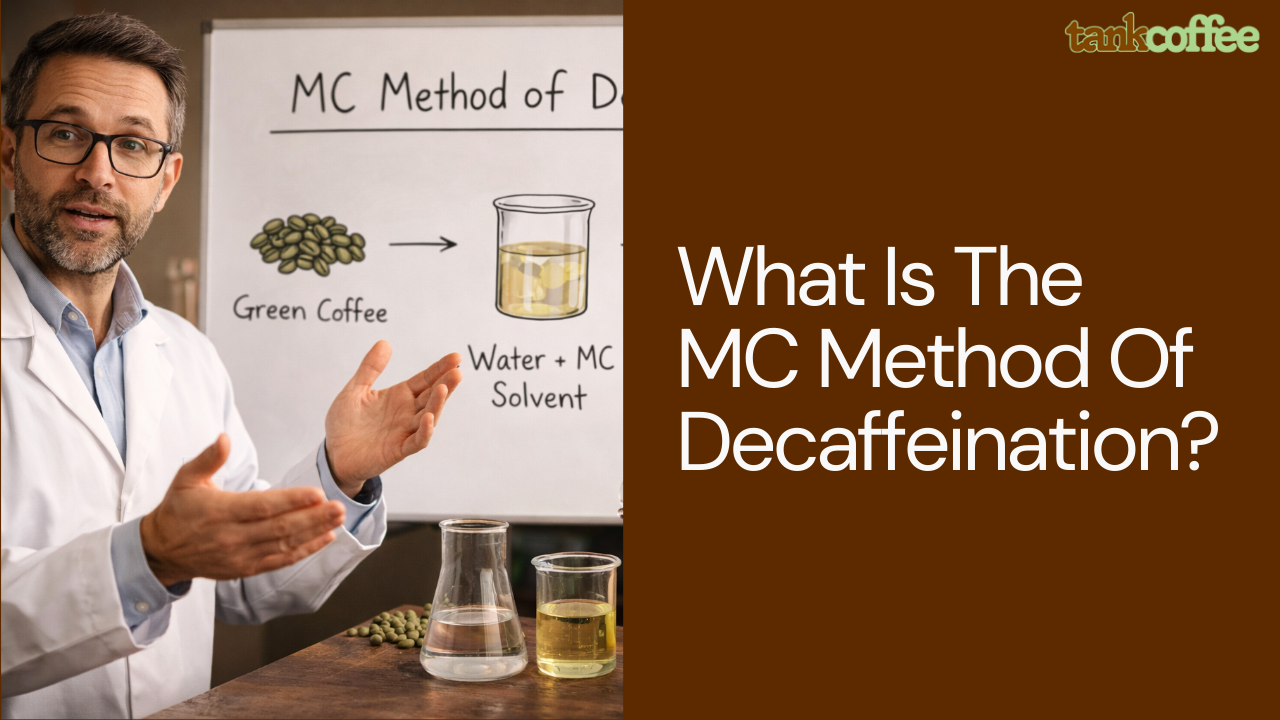
The MC method of decaffeination involves a direct solvent process using Methylene Chloride, where MC selectively targets caffeine molecules. Green coffee beans are moistened with water, which opens the bean structure. Methylene chloride is circulated through the beans, enabling caffeine extraction while preserving flavour compounds.
Caffeine removal occurs when MC binds caffeine, as caffeine is highly soluble in methylene chloride. Flavour oils and acids remain intact, as MC shows low affinity for non caffeine compounds. Steaming removes residual solvent, with heat driving methylene chloride evaporation.
MC decaffeinated coffee cannot be labelled “naturally decaffeinated”, since methylene chloride is not plant-derived. Health authorities define MC as safe below 10 parts per million (PPM), given established toxicology thresholds. Finished decaf coffee contains under 1 PPM MC, with roasting and brewing temperatures exceeding 40°C, ensuring full solvent removal.
Producers prefer this technique because the solvent efficiently extracts caffeine without stripping away the essential flavour oils.
The decaffeination process results in a bean that retains its natural aromatic compounds. Roasters prefer this technique because it maintains the cup quality and body of specialty coffee. Consumers enjoy a decaf coffee that tastes virtually identical to its caffeinated counterpart.