
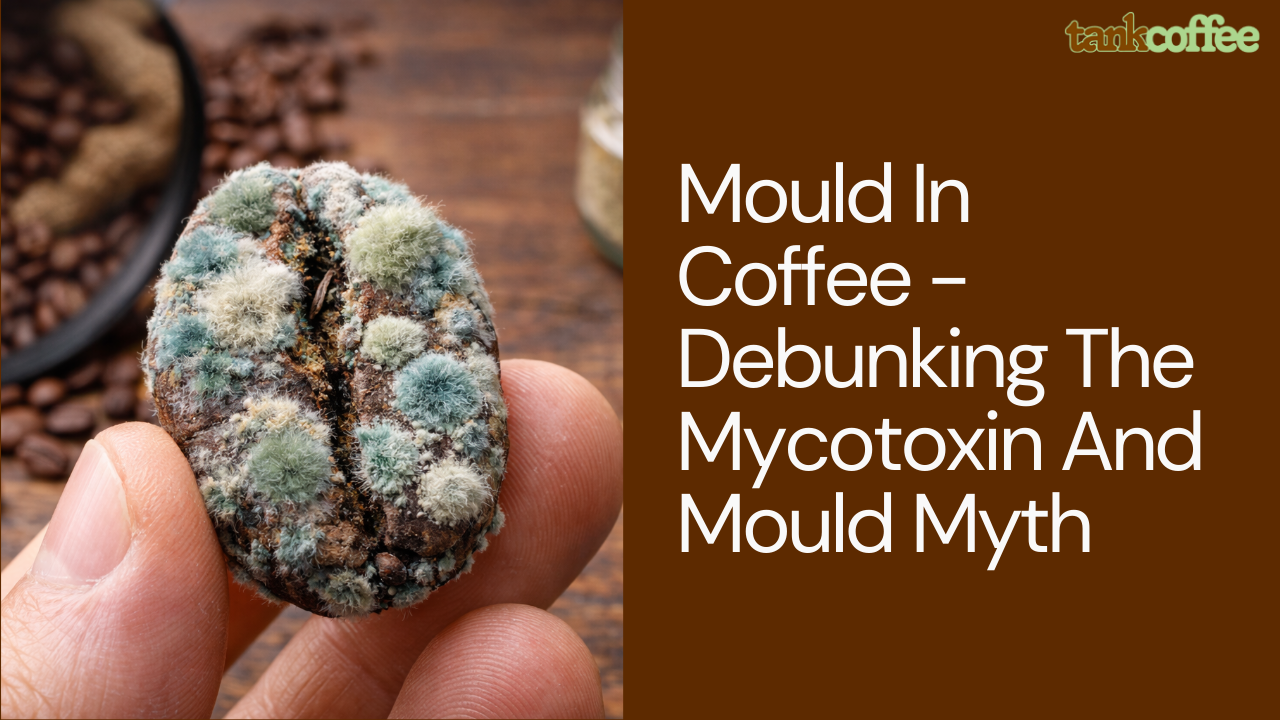
Mould In Coffee – Debunking The Mycotoxin And Mould Myth
If you have been browsing online wellness forums, you might believe that your morning brew is teeming with toxic mould. Mycotoxins and moulds are indeed real biological compounds that can develop on crops like coffee beans if farming and storage conditions are poor.
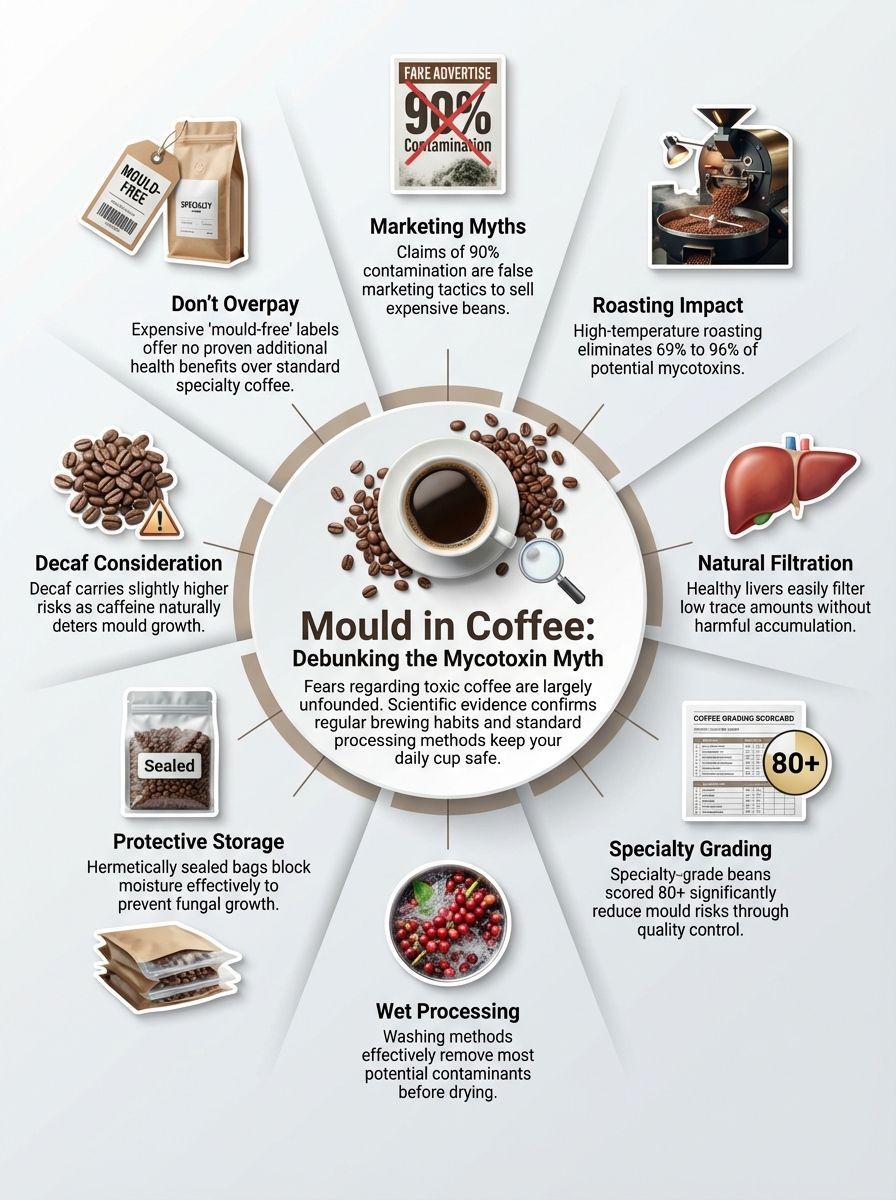
However, the claim that over 90% of all coffee carries dangerous levels is a marketing myth, not a scientific fact. In reality, strict import regulations and roasting chemistry work together to keep your cup safe.
Scientific studies and ISO accredited labs such as Cambium Analytica have consistently found “Not Detected” levels of aflatoxins, ochratoxin A, yeast, or mould in both regular and so called “mould free” brands.
Coffee roasting removes up to 96% of ochratoxin A and at least 20% of aflatoxins. Brewing then removes most other toxins left behind. Specialty grade coffee uses SCA standards to mark any sign of mould as a defect; this keeps only high quality beans reaching your cup with very low risk.
Some companies use scare tactics to sell pricier “mycotoxin free” options, though evidence shows well processed coffees meet legal safety guidelines worldwide without extra cost. Even decaf has slightly more mycotoxins because it lacks caffeine’s fungus blocking effects yet still remains below concern limits according to international food safety rules.
Lab tests from AOAC International support that strong processing steps protect you when buying commercially available coffees online or from shops. Concerns about paying more for special labels are mostly based on marketing rather than science or real health risks.
In my decade of experience running a premium coffee business in the UK, I have seen thousands of data sheets, and I can tell you exactly which numbers matter for your health and your wallet.
This guide will explain how industry standards protect you and how to spot high quality beans without paying a “fear tax.”
What Are Mycotoxins In Coffee?
Mycotoxins are toxic chemical compounds produced by certain fungi, specifically Aspergillus ochraceus, Aspergillus carbonarius, and Penicillium verrucosum. These toxins do not just appear randomly; they only form when coffee cherries or green beans are exposed to prolonged dampness during storage.
Definition And Common Sources
These toxins are essentially a defense mechanism for fungi. While they are most famous in coffee, they are actually far more common in other dried goods.
You will find them in:
- Dried Fruits: Raisins and figs often have higher allowable limits than coffee.
- Cereals and Grains: Wheat and corn are frequent hosts for aflatoxins.
- Wine: Grapes can develop mould before fermentation.
Ochratoxin A (OTA) is the specific mycotoxin regulators watch for in coffee. It has been reported in samples from regions like Nayarit, Mexico, but it is heavily regulated.
Fungi grow quickly when temperatures rise above 20°C and humidity goes over 65 percent. These conditions promote mould growth during harvest or storage on green coffee beans before roasting.
Poor drying methods and damp transport also increase contamination risks for commercially available coffee beans. Appropriate handling lowers the likelihood of harmful levels of mould or mycotoxins being present in your cup of coffee.
How Mycotoxins Form During Coffee Production
Mould growth is almost always a failure of process, not an inevitability of nature. If beans are left on the drying patio while it rains, or stored in a humid warehouse without ventilation, spores activate.
Key risk factors include:
- High Moisture Content: Green beans must be dried to between 10% and 12% moisture. Anything above 12.5% is a breeding ground for Aspergillus.
- Insect Damage: The Coffee Berry Borer beetle drills holes in the bean, creating an entry point for Fusarium moulds.
- Re-wetting: Condensation inside a shipping container (known as “container rain”) can ruin an entire shipment.
In these conditions, potentially mycotoxigenic fungi such as Aspergillus and Penicillium species may produce harmful compounds called mycotoxins.
Improper handling increases the risk for mycotoxin contamination in ground roasted coffee or instant coffee. Coffee stored without good airflow, left unprotected after rainfall at the farm, or kept too wet before roasting allows toxins like ochratoxin A (OTA) to develop.
Decaffeinated coffee may have more mould because caffeine helps limit fungal growth. Roasting only slightly lowers OTA if the beans already contain high amounts before processing at a factory in places like Nayarit, Mexico.
Good manufacturing practices help reduce exposure but cannot always remove all threats from fungus-produced toxins found in some samples of commercial and organic coffee products.
The Truth About Mold And Mycotoxins In Coffee
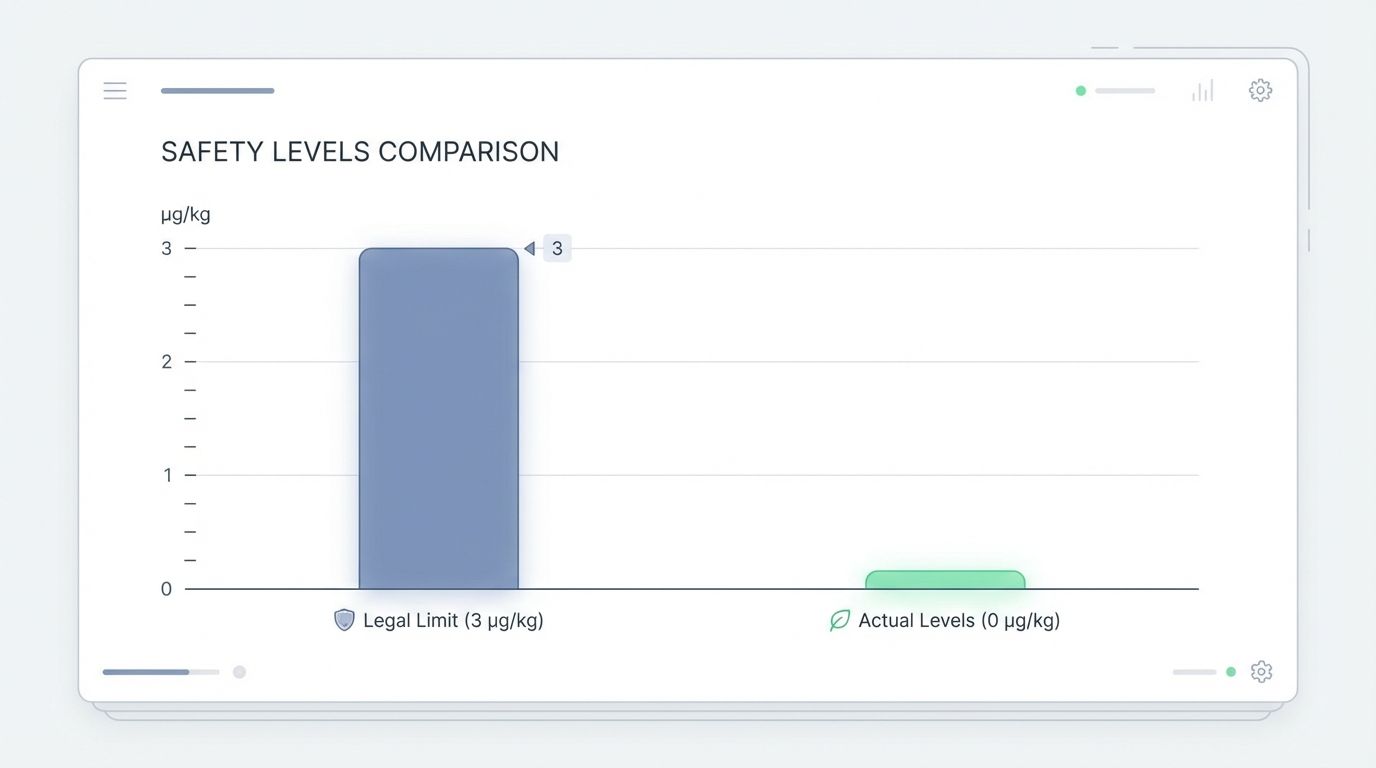
The majority of coffee sold in the UK and Europe is safe because the safety limits are incredibly low. For roasted coffee, the maximum allowable level of Ochratoxin A is 3 parts per billion (µg/kg). To put that in perspective, that is the equivalent of three seconds in thirty-two years.
Scientific Evidence On Mycotoxin Levels In Coffee
Studies show coffee contains traces of mycotoxins, but levels stay far below safety limits.
| Study/Source | Findings | Figures & Facts | Consumer Impact |
|---|---|---|---|
| FSA / EU Regulation 2023 | Legal limits lowered to protect consumers | Max limit: 3 µg/kg (roasted) | Strict legal safety net |
| Global Research | Traces of mould found in about 53% of coffee samples | None tested at harmful amounts | Risk is presence, not toxicity |
| Lab Testing (Cambium Analytica) | Tested 6 popular coffees and 2 “mould-free” brands | No aflatoxins, ochratoxin, or yeast/mould detected | Expensive brands had same results as standard specialty |
| Journal of Ag. & Food Chemistry | Roasting at 200°C destroys most toxins | 96% reduction in OTA | Darker roasts are technically cleaner |
| Aflatoxin B1 Analysis | Aflatoxin B1, a carcinogen, present in some samples | Levels did not exceed 2 µg/kg | Well below toxicity threshold |
Health Implications: Myths Vs. Facts
Claims that 90 percent of coffee contains unsafe levels of mould or mycotoxins are untrue. Scientific data shows that amounts found in coffee beans and ground coffee remain well below safety limits set by food regulatory agencies.
For example, independent tests on popular brands often report “Not Detected” for toxins produced by moulds such as ochratoxin A and aflatoxin B1.
Your liver processes low amounts of mycotoxins from brewed coffee easily, so they do not accumulate or cause ongoing conditions for healthy adults. The roasting process at speciality-grade roasters reduces mycotoxin concentration by 69 to 96 percent.
Spending more money on “mould free” or “mycotoxin free” coffee provides no demonstrated health improvement since all tested coffees meet strict standards already used by reputable growers and packagers.
How Coffee Roasters Prevent Mold And Mycotoxins
Professional roasters use a combination of physical sorting and thermal physics to guarantee safety. The primary defence is the Specialty Coffee Association (SCA) Green Coffee Defect Guide, which classifies “fungus damage” as a Category 1 defect—meaning a single mouldy bean can disqualify an entire bag from being sold as specialty coffee.
Sourcing High Grade Specialty Coffee
Select specialty grade coffee scored above 80 points using the SCA grading system, as these beans have fewer defects. Scores between 84 and 86 points reflect high quality with low likelihood of mould or potentially mycotoxigenic fungi in coffee.
Wet processing methods at reputable farms remove most contaminants that produce mycotoxins like aflatoxin B1 and ochratoxin. Specialty growers follow strict storage rules to block mould growth before you drink coffee.
Choosing specialty grade beans helps you avoid harmful levels of mould, keeping your brew safe and tasting fresh.
Proper Storage And Transportation Methods
The most critical phase for mould prevention is the journey from the farm to the roastery. Modern logistics rely on specific technologies to keep the beans dry.
- Hermetic Liners: Top producers use GrainPro or Ecotact bags. These are multi-layer plastic liners used inside jute sacks that create a gas-tight seal, preventing moisture ingress and suffocating any insects.
- Moisture Monitoring: Farmers use capacitance moisture meters like the Wile 200 to verify beans are between 10-12% moisture before bagging.
- Keep raw coffee bean moisture close to 15 percent since higher values increase risk for mold or fungi.
- Store green and roasted coffee in temperature-controlled spaces below 25°C with humidity under 60 percent.
- Dry beans after harvest until they fall between 11 and 12 percent moisture before bagging for transport.
- Select shipping containers equipped with insulation or desiccant packs to prevent condensation during travel from coffee growers.
- Do not stack bags against walls and floors that might collect water in warehouses or stores.
- Regularly test for ochratoxin a in coffee lots using modern laboratory tools to confirm mycotoxins are present only at safe, trace levels far under harmful limits.
- Rotate stock after shipment arrival so older beans get used first, keeping batches fresh and reducing mold exposure risks over time.
Controlled Roasting Processes
The roasting drum is an effective sterilisation chamber. When coffee beans hit the “First Crack” – the moment they expand and release moisture – the internal temperature exceeds 196°C.

“Research published in the Journal of Agricultural and Food Chemistry confirms that roasting at these temperatures destroys up to 96% of Ochratoxin A.”
Roasting coffee beans at high temperatures removes moulds and lowers mycotoxin levels. Studies show ochratoxin A, a toxic compound produced by some moulds, decreases by 69 to 96 percent during roasting.
This process keeps the amount of mould low in your daily brew.
Temperature and time both have an effect. Using controlled roasting methods lowers the risk of contamination in coffee. Small batch systems like closed loop production also help keep quality coffee fresh and free from harmful levels of mould or toxins produced by moulds.
These steps allow you to enjoy a safer, better-tasting cup with much lower mycotoxin exposure than raw green beans.
Should You Be Concerned About Mycotoxins?
For the average coffee drinker, the risk is negligible. You are statistically more likely to ingest mycotoxins from a handful of raisins or a glass of red wine than from a cup of high quality coffee.
Key Takeaways For Coffee Drinkers
Specialty coffee roasters use strict grading and careful sourcing to limit the presence of mould and mycotoxins in coffee. The percentage of coffee beans with harmful levels remains extremely low due to these controls.
Scientific tests indicate that trace amounts of toxins produced by moulds, such as ota in coffee, stay within safety limits.
You do not need to pay extra for “mycotoxin free” or “mould free” labels. Coffee Bros. and similar brands test their brews for transparency, as all specialty coffees continue to be clean.
Decaffeinated blends may carry slightly higher mycotoxin levels but still pose no risk. Selecting high quality seasonal beans in sealed packaging supports both your health and the farmers while steering clear of fear-based marketing tactics around toxicity or chronic condition risks from regular coffee consumption.
Conclusion
You now know that claims of harmful levels of mould in coffee lack scientific proof. Mycotoxins produced by fungi like Aspergillus and Penicillium occur at very low amounts when proper storage, roasting, and careful selection are carried out.
Coffee tested from six brands showed no detectable aflatoxins or ochratoxin A after lab analysis by Cambium Analytica. Buying high grade beans graded removes most risk, while paying extra for so called mycotoxin free coffee is not supported by research.
You can keep your brew safe with simple steps such as dry storage and prompt use, following advice used daily across respected roasteries worldwide. As someone who built a business on quality beans and trust, I encourage you to enjoy each cup with confidence, your health matters just as much as your taste experience.
FAQs
What Are Mycotoxins and How Do They Relate to Coffee?
Mycotoxins are naturally occurring compounds produced by fungi like *Aspergillus* which can grow on agricultural crops. While often sensationalised, the UK enforces strict safety limits for compounds like Ochratoxin A in all imported coffee.
Does Drinking Coffee Expose You to Dangerous Amounts of Mould or Mycotoxins?
No, industrial roasting at temperatures exceeding 200°C destroys the vast majority of mould spores and reduces toxin levels significantly. Rigorous screening by the Food Standards Agency prevents heavily contaminated green beans from entering the market.
Is There Such a Thing as Truly Mould-Free or Mycotoxin-Free Coffee?
Guaranteeing absolute zero presence is scientifically impossible as fungi exist naturally in all agricultural environments, though premium wet-processed beans reduce this risk to negligible levels.
Can the Health Effects of Drinking Regular Brewed Coffee Include Risks from Mould or Toxins?
Current medical consensus finds no link between moderate coffee consumption and mycotoxin-induced illnesses like kidney disease. The body efficiently processes the minute trace amounts that might remain after roasting and brewing.
How Can I Keep My Ground Beans Free from Excess Mould Growth at Home?
Moisture triggers fungal growth, so you must store beans in an opaque, airtight canister away from heat sources. Never keep coffee in the fridge, as the temperature changes cause condensation that ruins the bean’s integrity.
Do Decaffeination Methods Affect the Presence of Toxins Produced by Moulds in Brews?
Decaffeination acts as an intense wash cycle that strips away mould spores and water-soluble toxins like Ochratoxin A. Methods such as the Swiss Water Process significantly lower these compounds before the beans are even roasted.