
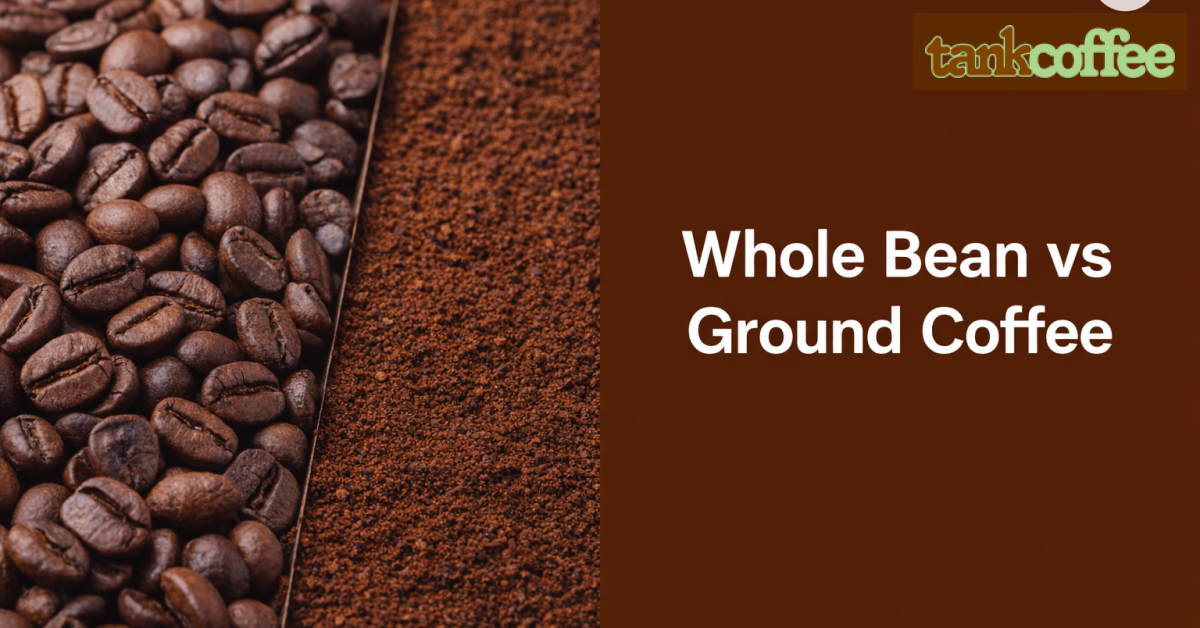
Whole Bean vs Ground Coffee
At our roastery in Leigh, the question comes up daily: “Is whole bean really worth it?” The price difference on the shelf feels real. To give a genuine answer, we ran a simple, practical test. Our head roaster, Garth, took a batch of our Great Taste Award-winning Ethiopia Sidamo and split it.
Half was kept as whole bean, and the other half was ground for a standard filter setting. We then cupped both, side-by-side, over a week. This isn’t a lab test, it’s a real-world comparison of how your coffee behaves after it leaves our roastery door.
Our Test: Freshness and Flavour
The core trade-off is flavour stability for convenience. Our test focused on how quickly the pre-ground coffee lost the characteristics we love in our Sidamo. The key finding was not a simple “yes” or “no,” but a time-based one.
If you finish a 250g bag in under five days, the difference is noticeable but perhaps not critical. If that bag lasts two weeks, the flavour gap becomes a chasm.
How Grinding Changed the Sidamo’s Aroma and Taste
Grinding shatters roasted coffee, dramatically increasing surface area. The immediate benefit is an intense bloom of aroma. We noted the pre-ground Sidamo was intensely fragrant on Day 1.
By Day 3, that initial aromatic burst was almost gone, replaced by a generic “coffee” smell. The whole beans, ground just before brewing, retained their specific floral and citrus notes throughout the week.
Why Oxidation Muted Our Ethiopian Coffee
Oxygen is the enemy of nuanced flavour. With the pre-ground coffee, oxygen had thousands of surfaces to attack. The volatile compounds that give our Ethiopian beans their bright, wine-like acidity were the first to go.
After a few days, the pre-ground cup tasted flat, with the flavour profile collapsing into a single, dull note. The whole beans held onto that complexity.
When Pre-Ground Still Makes Sense
We found pre-ground coffee makes sense for users who prioritize a frictionless morning routine. If you use one brew method, like a Moccamaster, and value speed over flavour nuance, pre-ground is a valid choice. The coffee is still good, it’s just missing the top 20% of its character.
Brewer Compatibility in Our Test Kitchen
Brewer choice dictates how much the grind matters. The hard water in many Greater Manchester homes already tends to mute acidity, making grind size even more critical for proper extraction. Our test highlighted where pre-ground fails and where it can pass.
Espresso: A Non-Starter for Pre-Ground
This was the most conclusive test. We couldn’t pull a single good shot with the pre-ground coffee on our La Marzocco. It was too coarse.
The shot ran too fast (a “gusher”), resulting in a sour, under-extracted cup. Espresso requires micro-adjustments to the grind that pre-ground simply cannot offer.
Pour Over: The Clearest Difference
Using a Hario V60, the difference was stark. The whole bean, ground with a Baratza Encore, produced a cup with clear notes of lemon and bergamot. The pre-ground coffee produced a cup that was heavier and muddier. The delicate flavours were lost, a direct result of both oxidation and a grind that wasn’t perfectly matched to the V60’s flow rate.
Cafetière & AeroPress: More Forgiving
Immersion brewers like a cafetière or an AeroPress were more forgiving. Since the coffee steeps directly in water, a non-perfect grind is less of a problem.
The pre-ground Sidamo produced a perfectly acceptable cup. It lacked the brightness of the fresh-ground version, but it wasn’t unpleasant.
The Realities of Convenience vs. Control
This is the heart of the matter. Whole bean gives you adjustment; ground gives you speed. Our experience suggests most people overestimate their need for control, but underestimate how much they’d notice the loss of flavour.
Who Should Buy Whole Bean
Brewers who enjoy the ritual of coffee, own more than one type of brewer, or are sensitive to flavour changes will get more from whole bean. The payoff is a cup that truly reflects the bean’s origin, something our partners like Ronda, a farm owner in Sidamo, work hard to produce.
Who Should Buy Pre-Ground
Ground coffee suits people with rushed mornings or those in shared spaces like offices. It removes the noise and mess of a grinder. It’s for the person who wants a reliable, good-not-great cup without extra thought.
What Beginners Actually Need
A beginner needs consistency. That comes from a decent burr grinder, a simple digital scale, and a repeatable process. Chasing “god shots” on day one is a path to frustration.
Grinder Costs vs. Bean Value
The cost includes the hardware. A cheap blade grinder gives you inconsistent particle sizes, creating both sour and bitter notes in the same cup. This can be worse than using good pre-ground.
The Upfront Cost of a Burr Grinder
A quality entry-level burr grinder like a Baratza Encore or a Wilfa Svart is a significant initial cost. However, it’s a one-time purchase that unlocks the full potential of every bag of coffee you buy afterwards. It’s an investment in flavour.
Finding Value in Every Cup
Value comes from freshness and control. If you have a grinder, you can buy a bag of our Kenya Kiri Kirinyaga AB and dial it in for espresso, then use the same beans for your weekend cafetière. That flexibility adds value.
When Buying Whole Bean Is a Waste of Money
If you buy a £150 grinder but only brew one cup a week, the beans will go stale. In that specific scenario, buying smaller bags of fresh pre-ground coffee just before you need it is more economical.
Storage, Shelf Life, and Real-World Waste
Bad storage will ruin any coffee. We ship our beans in one-way valve bags, but once you open it, the clock is ticking.
How We Store Whole Beans at the Roastery
At our roastery, situated near the historic Bridgewater Canal, we store green beans in temperature-stable conditions. Once roasted, whole beans are kept in airtight containers away from light and heat. A kitchen cupboard is fine; the top of the refrigerator is not.
Storing Pre-Ground Coffee at Home
The same rules apply, but the timeline is compressed. Once the aroma from the bag drops sharply, the flavour is already diminished. Use it as quickly as possible.
Which Option Creates Less Waste
Waste comes from stale coffee. If a single bag of whole beans can serve your V60, AeroPress, and cafetière, it reduces waste. If you only use a cafetière, buying pre-ground cafetière coffee means you’re not paying for versatility you don’t need.
Common Mistakes We See
Most bad coffee comes from a mismatch, not bad beans. Even our best Ethiopian Yirgacheffe will taste poor if the grind size is wrong for the brewer.
Using the Wrong Grind Size
Too coarse equals sour and weak. Too fine equals bitter and choked. This is the single biggest technical mistake beginners make.
Buying Too Much Coffee At Once
A 1kg bag seems like great value, but if it takes you a month to get through it, the last 250g will be a shadow of its former self. We encourage buying smaller 250g bags more frequently.
Forcing a Grind to Fit a Brewer
Using a generic “supermarket” grind in a precision brewer like an espresso machine will always lead to disappointment. The grind must match the machine.
How We Advise Customers to Choose
The best choice is personal. It depends on your life, not a perfect theory.
Choose Based on Your Machine
Espresso machines demand a good grinder and whole beans. Filter and immersion methods offer more flexibility.
Choose Based on Your Morning Routine
If you have 5 minutes, pre-ground might be your answer. If you have 15, the ritual of grinding can be part of the pleasure.
Choose Based on How Fast You Finish a Bag
If you finish a bag in a week, either works. If it takes longer, whole beans will hold their flavour far better.
Final Thoughts from the Roastery
Our test with the Ethiopia Sidamo confirmed our long-held belief: whole bean coffee offers superior freshness and flavour, but only if your routine allows you to use it. Pre-ground coffee provides simplicity and speed.
The best option is the one that fits how you actually make coffee in your home, here in Manchester or beyond. Match the format to your brewer and your lifestyle, and you’ll make the right choice.