
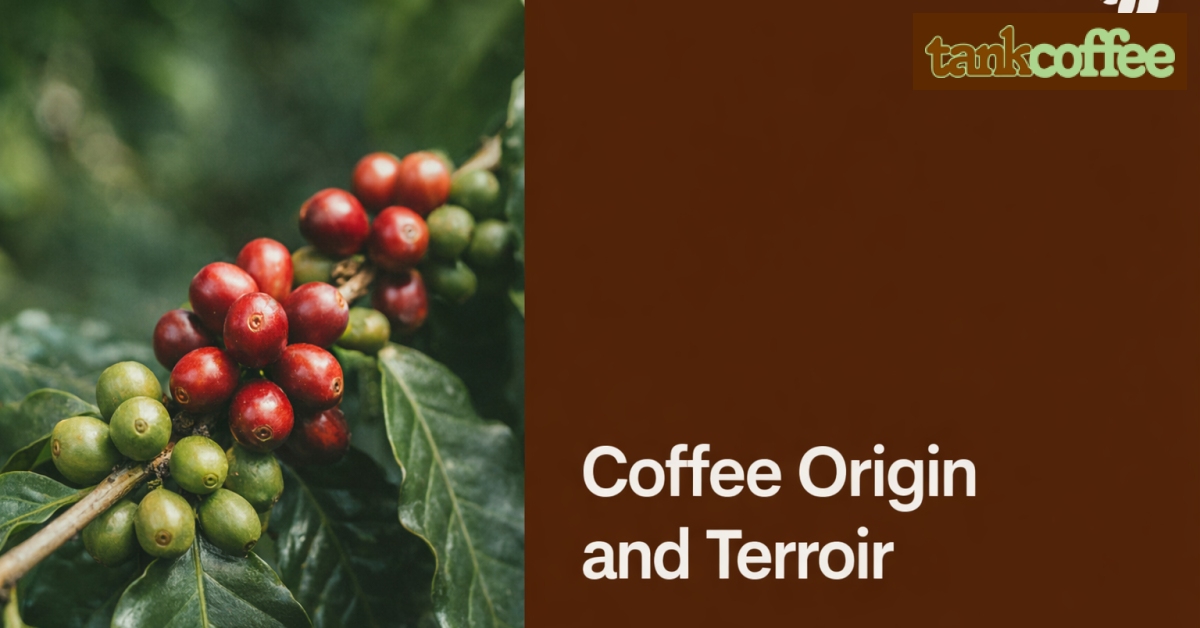
Coffee Origin and Terroir
You’re standing in an aisle, maybe even here at our roastery near the old mills, staring at two bags. One costs more. Its label mentions Ethiopia, a specific altitude, and a “washed process,” but what does that mean for your morning brew? Origin details set our expectations as roasters, but the final cup can still surprise a beginner if the processing or roast style shifts the profile.
Every time we assess a new green coffee, we use the same method: place, growing conditions, process, and then our own roasting plan. This thinking stops you from paying for a label and helps you choose a coffee for the right reasons.
How We Decode a Coffee’s Character from its Origin
A coffee’s origin is its address, from a vast country down to a specific hillside co-op when we can get that data. This sense of place dictates flavor through climate, elevation, soil composition, and local traditions. Origin is fundamental to taste and our commitment to traceability. For many, origin is the first thing they see on a bag, but it never tells the whole story. The processing method and our roasting decisions interact with that origin. It’s how two coffees from the same region in Colombia can taste worlds apart.
Beyond the Country: Why We Look for Farm-Level Detail
Country names give us broad strokes. We expect berry and citrus from many Ethiopian lots or classic chocolate notes from Brazil. Regions and individual farms give us a much sharper picture. I remember a trip to Colombia where one valley, blessed with consistent rainfall, produced sweet, balanced coffees, while a farm just over the ridge with different soil minerals yielded a cup with sharp, electric acidity.
Altitude, Climate, and Manchester’s Soft Water
Higher altitudes generally mean slower-growing coffee cherries. That slow development builds sugars and complex acids. Here in Manchester, this matters immensely. Our water, sourced from the Lake District, is famously soft. This low mineral content is a gift for brewing high-altitude coffees, as it allows the delicate, bright acidity of a washed Kenyan or Ethiopian to shine without being buffered or flattened. If we see high elevation on a label, we know it has the potential to produce a stunningly clear cup for anyone brewing in Greater Manchester.
How Post-Harvest Processing Defines the Cup
Processing is about how the fruit is stripped from the coffee bean (the seed). A washed coffee, where all the fruit is scrubbed off, generally gives a cleaner, more transparent taste. A natural coffee, where the bean is dried inside the whole fruit, often produces heavier, fruit-forward, and wilder flavors. Honey or pulped-natural methods fall somewhere in the middle.
What Terroir Means to a Roaster
For us, terroir is the sum of a coffee’s environment. It includes altitude, rainfall, and soil, but it’s a broader concept in coffee than in wine. Our choices post-harvest play a massive role. Terroir explains the shared tendencies of a region, but the hands-on work of picking, fermenting, and roasting can either amplify or mute that character. We treat terroir as critical context, not as gospel.
Why Coffee Terroir Isn’t Like Wine Terroir
Wine is largely a finished product once the grapes are harvested and fermented. Coffee goes through many more transformative stages. Every step, from drying on raised beds to the specific heat curve we apply in our [insert your roaster model, e.g., Loring S35] roaster, can steer the final flavor away from its pure, place-based character.
The Bean’s Potential vs. Our Decisions
Nature provides the raw genetic and environmental potential. Our human decisions unlock it. The precision of the harvest, the control during fermentation, the evenness of drying, and the roast profile we choose determine how much of that potential you actually get to taste.
Using Terroir to Avoid a Bad Purchase
Terroir gives you a framework for comparing bags. It helps predict a coffee’s style, but it won’t guarantee quality across different roasters or harvest years. Relying on it too heavily is a common pitfall.
Our Mental Map of Coffee-Growing Regions
Regional profiles are our starting point. They are patterns, not rules. They save us time when a customer in our Northern Quarter shop says they want something bright and citrusy versus something heavy and chocolatey. These are our first filters.
Africa
Coffees from Ethiopia and Kenya are known for their high, complex acidity, floral notes, and fruit-forward character. We’ve also had stunning lots from Rwanda and Burundi that were more delicate and tea-like.
Latin America
These coffees often present a balance of sweetness and body that is very approachable. From the crisp caramel of a Colombian to the soft, nutty profile of a Brazilian, there is incredible diversity.
Asia-Pacific
Coffees from this region, particularly Indonesia, often show up with earthy, herbal, and full-bodied notes. We’ve sourced lots from Papua New Guinea that surprised us with a clean structure you might not expect.
How to Read a Coffee Bag Like We Do
A coffee label compresses a story into a few lines. The order matters. We start with the place, check if it’s a blend or a specific lot, then examine the process and variety. This habit grounds the purchase in reality, not just marketing.
Single Origin, Blend, and Micro-Lot
Single origin means the coffee is from a single source, which could be a country or a specific farm. Blend means we’ve combined coffees for a target flavor profile. Micro-lot points to a small, specially separated batch with exceptional traceability.
Decoding Region, Farm, and Producer Names
More detail doesn’t automatically mean better coffee, but it means more traceability. If you love a coffee from the “Finca El Diviso” farm in Colombia, that name is how you’ll find it again, not just “Colombia.”
Why Roast Date, Process, and Variety Matter
The roast date is your best indicator of freshness. The process (washed, natural) hints at the cup’s texture and flavor shape. The variety, like Bourbon or Gesha, adds another layer of specificity that becomes clear in a side-by-side tasting.
Choosing the Right Coffee for Your Brew
Connecting label details to your preferred brewing method is key. A coffee that sings as a pour-over might feel too aggressive as an espresso. The goal is to narrow your choices and make confident repeat buys.
Matching the Coffee to Your Brewer
Filter methods like V60 often amplify clarity and acidity, which is perfect for high-altitude washed coffees. Espresso relies on solubility and body, so coffees with more sweetness and a rounder profile often work well, though we love pulling bright, acidic shots from certain African lots.
Matching Your Taste to a Region
If you enjoy berries, bright citrus, and tea-like notes, we’ll almost always point you toward East Africa. If you prefer caramel, cocoa, and a softer cup, we’ll likely start you off in Latin America.
The Reality of Seasonality and Stock
Coffee is a crop with a harvest season. Your favorite Ethiopian lot might be gone for months. Its replacement, even from the same farm, will taste different due to that year’s growing conditions. This is the reality and excitement of working with a fresh agricultural product.
Common Traps We See Customers Fall Into
Origin terms sound absolute, but they’re easily misinterpreted. Assuming a famous origin guarantees quality is a recipe for disappointment. Quality is a long chain of events.
Why a Famous Origin Doesn’t Guarantee Quality
A famous country name can’t save a coffee from bad farming, defective beans, or a stale roast. Last year, we had a single-farmer lot from a lesser-known region in Uganda that easily beat out a prestigious Panamanian Gesha on our cupping table. The farmer’s careful work was the deciding factor.
How Our Roast Style Translates Origin
The roast determines how much of the origin character remains. With darker roasts, we develop more body and caramelized notes, but this inevitably trades off some of the coffee’s delicate floral or fruit tones.
Tasting Notes Are Clues, Not Contracts
Tasting notes are our best attempt to describe a coffee’s character. But your water, your grinder, and your own palate will affect the result. Two people can describe the same cup differently; neither is wrong.
If you want a clearer framework beyond origin, our guide to key coffee bean quality factors breaks down what actually drives quality from farm practices to defects and freshness.
Our Roaster’s Decision Rubric
This is how we mentally connect clues on a label to the final cup, especially considering our local water. This isn’t about perfect prediction; it’s about reducing the chance of a mismatch.
| Label Clue | Likely Cup Direction (with Manchester Water) | Good Fit For |
|---|---|---|
| Ethiopia, washed, high altitude | Extreme clarity, bright acidity, lemon, floral tea | Filter drinkers seeking delicate flavors; our soft water makes this shine. |
| Brazil, natural | Low acidity, heavy body, dark chocolate, nutty sweetness | Espresso machines and milk-based drinks. |
| Colombia, washed | Balanced sweetness, medium body, caramel, stone fruit | An all-purpose coffee for any brewer, from French Press to Aeropress. |
| Indonesia, wet-hulled | Full body, earthy and herbal notes, pipe tobacco | French press or someone looking for a deep, lingering cup. |
| Micro-lot, named producer & variety | A very distinct, often unusual flavor profile | Adventurous drinkers and people in Didsbury or Chorlton who enjoy novelty. |
It All Comes Together in the Cup
Origin and terroir explain the potential of a coffee, but they are just the start of the conversation. The farmer’s skill, the processor’s choices, our roasting philosophy, and your brewing method all complete the story. A coffee bag becomes a map once you learn to read it. That simple skill makes finding a coffee you love much less about luck and more about knowledge.