
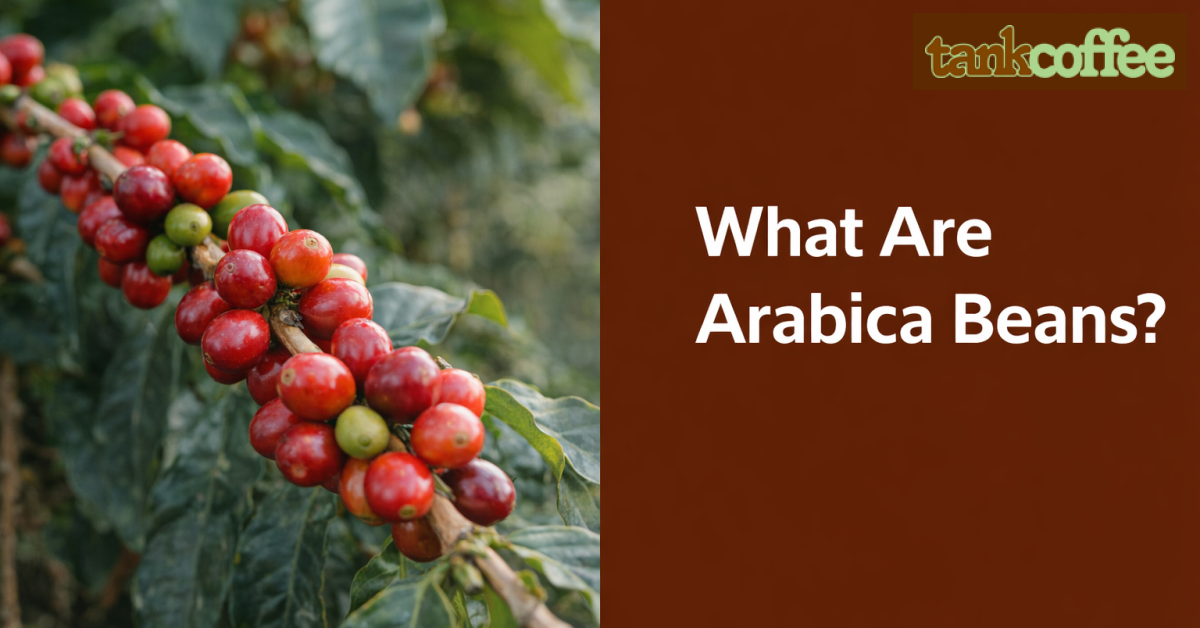
What Are Arabica Beans?
As artisan roasters in Greater Manchester, we work exclusively with the coffee species Coffea arabica. You’ll see “100% Arabica” used as a quality stamp everywhere, but that label tells you very little. The real story of an exceptional coffee depends on its specific origin, the processing method used at the farm, and the way our head roaster, Garth, profiles it on our Turkish-built roaster, Grace.
Arabica is our focus because it delivers the aromatic complexity and bright acidity we love. The best lots we source from Africa have nuanced flavours that are simply absent in other species like Robusta. This quality comes at a price. Arabica plants are sensitive, demanding specific growing conditions and meticulous handling from the farmer all the way to our roastery door in Leigh.
What We Look For in Arabica Beans
Arabica makes up most of the world’s specialty coffee, appearing on every cafe menu and roaster’s offering list, including ours. The name only signifies the species, not a guaranteed standard. You still need to check the origin, roast date, and the roaster’s own tasting notes.
We value Arabica for its incredible range. When we cup a new delivery, one lot, like a washed Ethiopian, might present with notes of citrus and flowers. Another, like our Kenya Kiri Kirinyaga AB, can be full of blackberry and rich dried fig. This diversity is a direct result of where and how the coffee is grown and processed.
Where Arabica Comes From Coffea arabica first grew wild in the highlands of Ethiopia before spreading via Yemen to the rest of the world. We source our beans from its birthplace across Africa and other renowned regions in Latin America.
Why It Matters to Us Arabica gives us a broader canvas to work with. It allows Garth to develop roast profiles that intentionally highlight a coffee’s inherent sweetness and origin character. When you see us providing detailed notes on a farm or processing method, it’s a signal that we’ve taken a deliberate approach to bring out those unique qualities.
How It Differs From Other Species Compared to its common counterpart, Robusta, Arabica typically has lower caffeine, a wider and more delicate flavour spectrum, and is much more difficult to farm successfully. Most people notice Robusta’s assertive bitterness and heavy body, which is a world away from the coffees we choose to roast.
How Growing Conditions Shape the Final Cup
Arabica plants demand stable, specific conditions, which directly influences both their cost and their quality. Key factors like altitude, temperature, and soil composition determine the density and sugar development within the coffee bean.
This sensitivity means that a slight change in climate or a delayed harvest can show up as a flaw during roasting. That direct connection is why we obsess over origin details; they are far more than just decoration on our bags.
Altitude, Climate, And Soil Growing coffee at high altitudes, like the 1,900-meter-plus slopes of Mount Kenya where our Kenya Kiri is cultivated, slows down the cherry’s ripening process. This slow maturation leads to a denser, more complex bean. Arabica thrives in the mild temperatures and well-draining red volcanic soils found in these elevated regions.
Why It Affects Flavour Those specific growing conditions change how the coffee cherry develops and stores the acids, sugars, and aromatic compounds that create flavour. Any stress on the plant, such as a drought or inconsistent ripening, will often produce a coffee that tastes flat or astringent in the final cup.
Our Producing Regions We source from many of the world’s best Arabica regions, with a special focus on Africa. Coffees from Kenya, Ethiopia, and Burundi each have their own distinct character, shaped by local climate and traditional processing methods as much as by their geography.
What Our Arabica Coffees Taste Like
A well-handled Arabica tastes cleaner, sweeter, and more aromatic than mass-market commodity coffee. This doesn’t mean every coffee is fruity. Depending on how we roast it, the profile can shift toward deep chocolate, nuts, or spice. The key markers we look for are acidity, sweetness, and body. Acidity is often the first thing people notice, but the hallmark of a great Arabica is balance.
Typical Flavour Notes When we write tasting notes, we’re describing our own sensory experience. For our Ethiopia Sidamo, that might be blueberry, lemon, and caramel. For our Kenya Kiri Kirinyaga AB, we note blackberry, rhubarb, and a distinct fig sweetness. These profiles come directly from the bean’s origin, varietal, and processing.
Acidity, Sweetness, And Body Our Arabica selections generally feature a brighter, more defined acidity and a lighter body than Robusta. The sweetness feels clean and clear, especially when a coffee is roasted evenly and brewed correctly.
How Processing Changes the Profile Processing refers to how the fruit is removed from the coffee seed after it’s picked. A “washed” coffee, like our Kenya Kiri, is scrubbed clean before drying. This method produces a cup with exceptional clarity, allowing the crisp lime and berry notes to shine. A “natural” coffee is dried with the fruit intact, which imparts intense, jammy fruit notes, as found in many Ethiopian lots.
Arabica vs. Robusta: A Practical Comparison
Arabica and Robusta serve different markets. We choose Arabica for its detailed flavour. Robusta is often used to add intensity, crema for espresso, caffeine, and to lower the cost of a blend. Many supermarket blends will contain both. A label that specifies “100% Arabica” is a starting point, but the roaster’s skill and the quality of the green beans are what truly shape the cup.
Flavour Differences Arabica generally offers more complexity and sweetness. Robusta trends toward earthy, bitter, and rubbery notes.
Caffeine Content Robusta has significantly more caffeine than Arabica. This contributes to its bitterness and makes the plant more resistant to pests.
Growing Difficulty And Yield Arabica is a fragile species, vulnerable to pests and climate shifts, and it yields less fruit per plant. Robusta is hardier, tolerating higher temperatures and producing more coffee, making it cheaper to grow.
Price And Availability High-grade Arabica costs more due to the agricultural risks involved. Robusta is cheaper and more common in instant coffee and budget espresso blends.
How We Identify High-Quality Arabica
Saying “100% Arabica” means nothing if the coffee is old, defective, or poorly roasted. The information on the bag provides more clues than marketing slogans. We believe in transparency, so we provide the roast date, origin details, and specific tasting notes to give you a clear picture of what’s inside.
Roast Date And Freshness The “roasted on” date is the most critical piece of information on a bag of coffee. Beans are at their best in the weeks following a roast, not months. We roast to order, so your coffee always arrives fresh.
Origin And Traceability Details like the country, region, and processing station (like the Kiri factory in Kenya) signal a higher level of quality and traceability. This transparency almost always correlates with better sorting and a clearer, more defined flavour.
Whole Bean Appearance When you look at our whole beans, you’ll see they are consistent in size and colour. This indicates careful sorting at the farm and a controlled, even roast from our machine, Grace. Some oil on a darker roast is fine, but excessively oily beans are a sign of stale or over-roasted coffee.
Cupping Notes And Quality Signals Our cupping notes are practical, like “red apple” or “hazelnut,” not vague terms like “premium.” We also provide quality signals like processing method and altitude, which are verifiable markers of a coffee’s pedigree.
Why Great Arabica Costs More
The higher price of specialty Arabica reflects the immense agricultural risk and labour involved. From the plant’s sensitivity to the multiple stages of sorting and grading, every step adds cost while ensuring a higher quality final product.
Farming Conditions Arabica requires a narrow band of temperatures and specific altitudes to flourish, reducing the amount of land suitable for its cultivation.
Lower Yield And Greater Sensitivity Arabica plants are more susceptible to disease and produce less coffee cherry per plant than Robusta, making each harvest more valuable.
Sorting, Grading, And Export Quality Before we even see the coffee, it has been sorted multiple times to remove damaged or under-ripe beans. When we list a grade like “Kenya AB,” we’re referring to a specific bean size that has passed rigorous quality control at the export level. This meticulous process is essential for preventing dull or defective flavours.
Brewing Arabica with Manchester Water
How your coffee behaves in the brewer is critical. Here in Greater Manchester, our tap water is famously soft, with a very low mineral content (TDS). While this prevents limescale, it’s not ideal for brewing complex coffee.
Minerals like magnesium and calcium are what pull flavour from the coffee grounds. Without them, our soft water can under-extract the beans, making a bright, floral Ethiopian Yirgacheffe taste sharp and thin, or a sweet Brazilian taste flat. You are missing out on the flavour you paid for.
For filter brewing, you can dramatically improve your results by using a simple mineral packet (like Third Wave Water) mixed with distilled water. For espresso, a specialised in-line filter that adds minerals back is a worthy investment to protect your machine and get the best flavour.
Suitability For Espresso Arabica excels for espresso when the roast is developed enough to maintain sweetness under pressure. Very light roasts can taste overly sharp, which is why our espresso blends have a roast profile designed to bring out body and caramelisation.
Suitability For Filter Coffee Filter methods like a V60 or batch brewer are perfect for highlighting the clarity of our single-origin Arabicas. The floral and tea-like notes in a washed coffee are much more apparent in a filter brew.
Grind And Extraction Your grind size is your main tool for controlling extraction. A finer grind increases contact time and extraction, while a coarser grind reduces it. The right setting depends entirely on your specific brewer and the coffee you’re using.
Common Myths About Arabica
Marketing has created a lot of confusion around Arabica. Quality is not guaranteed by the species alone; it’s a result of careful work at every step, from farming and processing to roasting and brewing.
“Arabica” Does Not Always Mean “Better” A poorly grown, old, or badly roasted Arabica will always taste worse than a fresh, well-handled coffee of any species.
Single Origin And Arabica Are Not The Same “Single origin” describes the source (a single farm or co-op). “Arabica” describes the plant species. A coffee can be a single-origin Robusta, or a blend of Arabicas from multiple countries.
Roast Level Changes Everything The same green coffee bean can taste radically different depending on the roast. Darker roasts will always mute the delicate origin notes we work so hard to source and introduce flavours of smoke and caramel.
How to Choose Your First Bag
The best way to start is to match the beans to the flavours and brew styles you know you like. Reading the flavour notes on the bag is the most practical way to find a coffee you’ll enjoy.
A blend can also be a great choice. Our blends are designed for balance, consistency, and to work well with milk, which can sometimes overwhelm a delicate single-origin. The goal is to find a coffee that fits your daily routine.
Matching Beans To Taste Preference If you enjoy bright, fruity flavours, look for our washed coffees from Kenya or Ethiopia. If you prefer classic notes of chocolate and nuts, a medium-roast from Brazil or one of our espresso blends would be a better fit.
Choosing By Brew Method Espresso drinkers often benefit from roasts with more body and sweetness. Filter coffee drinkers should look for lighter roasts that preserve the bean’s aromatic complexity.
When To Pick A Blend Choose a blend when you want a consistent, balanced cup, especially if you drink your coffee with milk. Some of our single origins are just too delicate to stand up in a flat white.
Our Quick-Check Buying Guide
Use this table as a simple tool to judge a bag of coffee based on the evidence provided.
| Check | What It Tells You | Likely Outcome |
|---|---|---|
| Recent roast date | Freshness and usable flavour window | Better aroma and clearer taste |
| Clear origin and process | Traceability and style expectation | Easier match to your taste |
| Tasting notes you recognise | Practical flavour direction | Lower chance of buying the wrong profile |
| Roast level matches brew method | Brewing fit | Easier extraction and better balance |
| Blend vs single origin stated clearly | Intended use and consistency | More predictable results in the cup |
A quick check is whether at least three of these signals appear clearly on the bag or product page. That keeps the decision focused on useful evidence rather than broad Arabica claims.
It’s More Than Just a Bean
For us, Arabica isn’t just a product. It’s the life’s work of the farmers we partner with in Africa. It’s the challenge our roaster Garth embraces every day in our little roastery in Leigh, finding the perfect expression for each bean in the shadows of the old spinning mills.
When you buy from us, you’re getting a coffee that has been handled with care from the moment it was picked. Our goal is to honour that journey by roasting it to order and ensuring what ends up in your cup is fresh, transparent, and delicious.